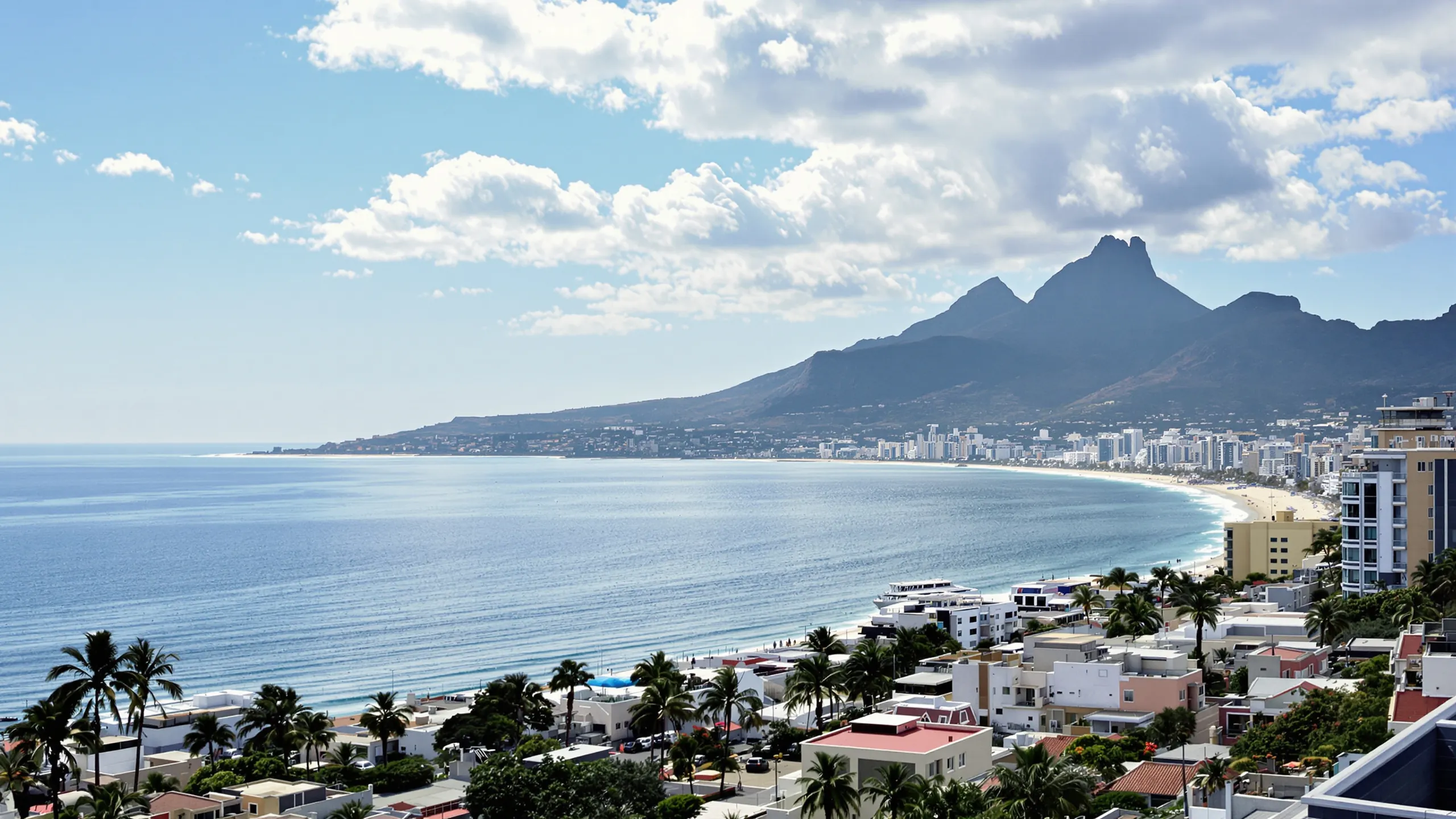
Canary Islands for digital nomads: find your dream island, know the costs, dodge the pitfalls
Escape the cold. Find your people. The Canary Islands are Europe's biggest winter base for remote workers: 20-26 °C all year, fiber even in the surf towns and a large community. Ready to make it yours? Discover which island suits you, what a month costs and where the tax line runs.
Why digital nomads fall in love with the Canary Islands
Swap winter gloom for a T-shirt, a sea view, and a working day you actually look forward to. Every winter, the coworking spaces of Las Palmas and the cafés of El Médano fill with people doing exactly that. The draw? Temperatures of 20-26 °C year-round, fiber even in small surf towns, a big international community, and full Spanish and EU territory, with the infrastructure that comes with it.
And you don’t have to leave your clients’ schedules behind. The islands run on Western European Time, UTC+0 in winter and UTC+1 in summer, one hour behind Central Europe. With clients in Europe, your working day barely shifts, a freedom no other winter destination with this climate can offer.
Which island suits you
Gran Canaria is the city island, where you can feel part of something bigger. Las Palmas, with about 380,000 people, is the only real city in the Canaries, with a university, a port and a daily life that would exist without tourism. Find your people around Las Canteras beach and the Guanarteme neighborhood, the heart of the nomad zone. In winter its community is the largest in Europe, with a local Slack group of over 10,000 members and established coworking spaces such as Soppa de Azul, The House and CoworkingC. Find your fit in our Gran Canaria guide.
Tenerife has the widest range: why settle for just one way to live? Choose the urban energy of Santa Cruz and La Laguna in the north, the established north coast town of Puerto de la Cruz, or the surf-and-nomad life of El Médano in the south, with the 3,700-meter Teide in between. The south is sunnier and more touristic; the north greener, cheaper and more Spanish. Discover your Tenerife in our Tenerife guide.
Fuerteventura is for wind, waves and space, room to finally exhale. Corralejo in the north has become a small but established nomad base, with coworking, coliving and a scene where kitesurfers and developers cross paths. Just know: infrastructure is thinner than on the big islands. See if it’s your escape in our Fuerteventura guide.
Lanzarote sits in between: lose yourself in volcanic landscapes, the legacy of César Manrique and a small scene around Arrecife and Costa Teguise. La Palma, La Gomera and El Hierro offer quiet for self-sufficient people with stable clients who crave a slower rhythm.
One climate detail could change your choice: first-timers underestimate the trade-wind clouds over the islands’ north sides, often overcast in summer. Dreaming of dependable sunshine? The south sides are reliably sunny, but more touristic.
Internet, coworking and getting around
Fiber is available across the main islands. Enjoy the freedom to work without missing a beat: symmetrical connections of several hundred Mbit/s are standard in apartments, and mobile data is cheap. From El Médano to Corralejo, video calls and cloud work run smoothly.
Find your workday rhythm in Gran Canaria and Tenerife, with a real choice of coworking spaces at roughly €100-250 a month; Fuerteventura and Lanzarote have fewer but enough. Want an easier first stop? A growing coliving scene brings your room and desk together.
Why settle for just one island? Ferries and cheap domestic flights make moving islands every month or two practical. Many people split the season: think city months in Las Palmas, then surf months on Fuerteventura. Make room for both.
What a month really costs in 2026
Dreaming of life in the Canaries? They are no longer cheap, but they are still moderate by European standards. Here are the realistic bands as of August 2026:
| Item | Monthly cost |
|---|---|
| Room in a shared flat (Las Palmas, Tenerife hotspots) | €350-550 |
| Small studio or one-bedroom apartment, normal location | €700-1,000 |
| Coworking | about €100-250 |
| Total for one person with a room, coworking, food and leisure | about €1,300-1,800 |
That dream sea view or beach location comes at a premium: the Las Palmas rent index recently stood at just over €15 per square meter. A menú del día starts at about €12, while rental cars and anything touristic come with visitor prices. Budget wisely, and enjoy what you came for.
Book early. Don’t let your winter escape slip away. From November to March you compete with thousands of other winter visitors, and Las Palmas has one of Spain's tightest rental markets. Secure your accommodation two to three months before you arrive, and give yourself peace of mind.
Visas and registration
Your dream of island life starts with getting the paperwork right. The Canary Islands are full Spanish territory and part of the EU. If you are not an EU citizen, your route to a longer stay with remote work is the Spain digital nomad visa, the visado de teletrabajo; our profile explains the income threshold and the pitfalls to avoid. EU citizens need no visa but must register in the Central Register of Foreigners after three months.
Don’t let paperwork stand between you and feeling at home. Everyone staying longer needs an NIE, Spain's foreigner identification number, for almost everything practical: a lease, a phone contract, a used car. Appointments (cita previa) are scarce on the islands in season, so spare yourself the stress: apply in your first weeks, not on day 85, or apply beforehand through a Spanish consulate. Getting connected is easier: a Spanish prepaid SIM with plenty of data is cheap and sold in every phone shop.
IGIC, ZEC and the 183-day line
IGIC affects everyone. Enjoy the savings, but don't expect an income tax miracle. Your island dream comes with a welcome bonus: the islands are outside the EU VAT area. Instead of Spain's 21% IVA, the Canarian IGIC applies with a standard rate of 7%. Electronics and restaurants are a little cheaper. Your income tax? Unchanged.
ZEC affects almost no one. That irresistible 4% headline demands a serious commitment. The Zona Especial Canaria is an EU-approved regime where approved companies pay only 4% corporate tax on ZEC income. But there's no shortcut: you need real substance. On Gran Canaria or Tenerife, that means at least five jobs and €100,000 of investment (three jobs and €50,000 on the smaller islands), with the jobs filled within six months and kept throughout. The EU Commission has approved the extension of ZEC benefits to the end of 2032. Solo freelancer with a laptop? Don't build your dream around this. It is not your tool.
The 183-day line decides everything. Protect your dream move from a painful tax shock. Spend more than 183 days a year in Spain or have your center of vital interests there, and you become fully taxable on your worldwide income at progressive rates, with regional wealth tax and the Modelo 720 reporting requirement for foreign assets. The Canaries count in full; don't overlook that. A November to April stay remains below the line, and a winter here does not change your tax status at home. Tempted by the Beckham regime's flat 24%? It's built for incoming employees and usually does not fit the self-employed. And US citizens remain subject to US tax on worldwide income wherever they live.
The honest weak points
- Island fever is real. Even the largest island is about 50 km across. After three months, those stunning beaches, unforgettable hikes and friendly faces feel familiar. Switching islands gives you a refreshing change, but if your heart aches for a continent, it won’t fill that gap.
- The scene is seasonal. From November to April, the community is big, then it shrinks. In July, you’ll still find company in Las Palmas, but hardly in the small towns. Your reward? Quieter cafés, relaxed landlords and more contact with locals. Less buzz. More room to breathe.
- Mass tourism stays. The south of Tenerife and Gran Canaria lives almost entirely off it. Dreaming of an undiscovered paradise? You’re decades late. Don’t arrive hoping reality will change for you. Come with your eyes open, and choose it for what it actually is.
Canary Islands for digital nomads: your winter escape or forever home?
For a winter base for two to five months, the Canaries are one of Europe’s most comfortable choices. Feel settled from the start with stable infrastructure, a big community and a time zone close to your European clients.
Dreaming of a permanent home? Spanish taxes kick in from day 184. Want the climate but a cheaper tax residence? Build your base elsewhere and enjoy the islands below the threshold. Within Spain, compare the Costa Blanca, but expect real winters. Wherever your next chapter takes you, you need health insurance that covers you between stops.
Frequently asked questions
Which Canary Island is best for digital nomads?
Craving city life and connection? Choose Gran Canaria for the largest community in Las Palmas. Love variety? Tenerife’s scene spans several towns. Dreaming of wind, waves and room to breathe? Head to Fuerteventura, around Corralejo.
Do I need a visa for the Canary Islands?
Your island dream could be closer than you think. The islands are Spanish and EU territory, so EU citizens need no visa. For non-EU citizens ready to stay longer and work remotely, the Spain digital nomad visa is the way forward.
Are the Canary Islands tax-free?
No, and that mistake could cost you dearly. That tempting 7% IGIC replaces VAT, not income tax. Spend more than 183 days a year in Spain, or have your center of vital interests there, and you’re fully taxable in Spain on your worldwide income. Don’t let a low tax rate blindside you with a costly reality.
One winter, or a new home?
Dreaming of a season in the Canaries, or a move to Spain? The visa and tax consequences are very different. Book a consultation and take control of your plans, before the 183 days decide for you.
Book a consultation