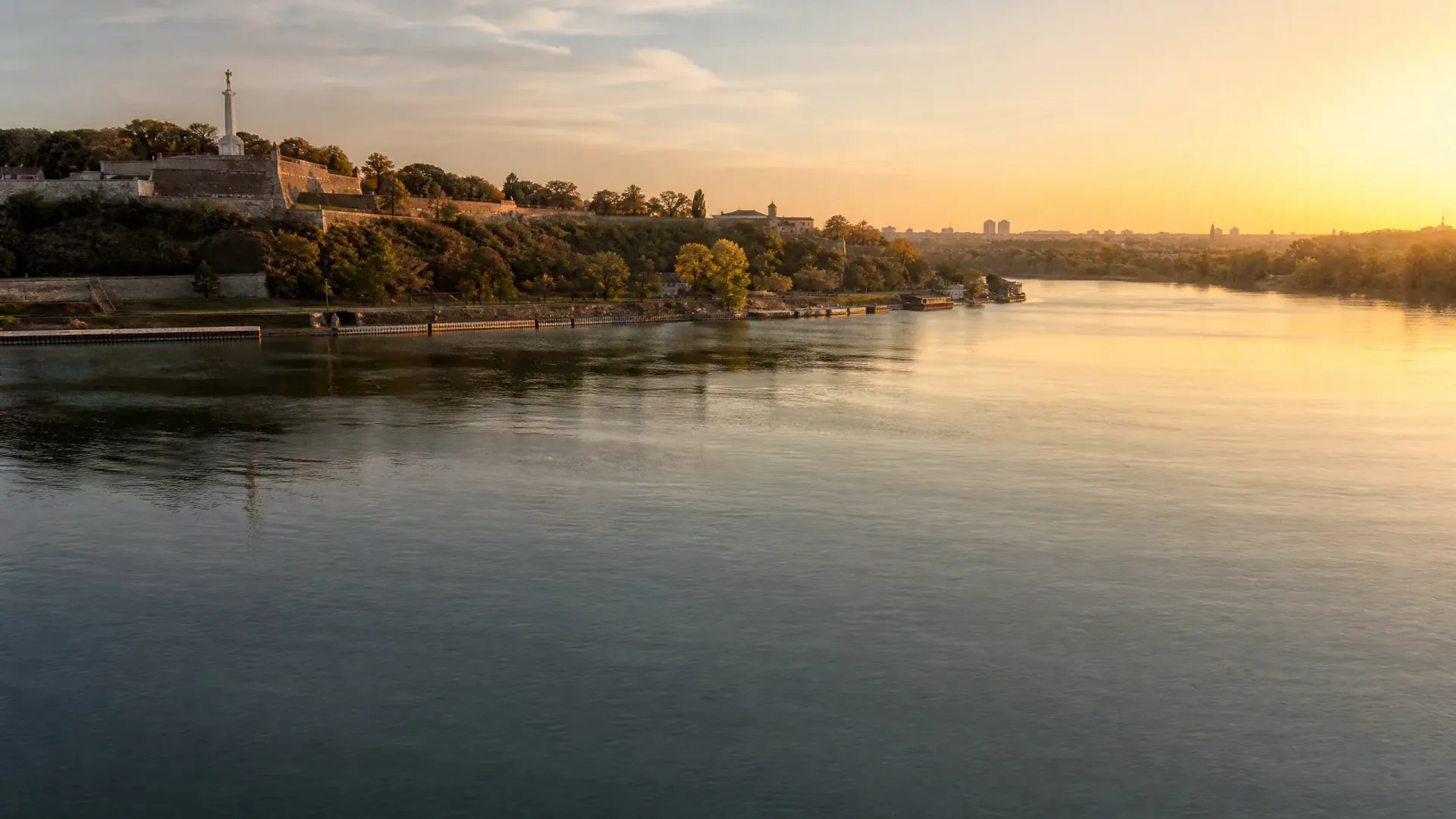
🇷🇸 Serbia for Digital Nomads: Live Your Dream in Belgrade on Central European Time
Build a life you love in Belgrade, one of the liveliest cities in Europe, with fast internet, excellent food and prices well below Western Europe. No nomad visa? There’s something real to plan around: a multi-year permit and a flat-rate tax status for the self-employed.
At a glance
| Monthly costs | Belgrade €1,000-1,500; Novi Sad €800-1,200 |
|---|---|
| Internet | Fiber 100-1,000 Mbps for RSD 2,500-4,500 a month |
| Time zone | UTC+1, UTC+2 in summer |
| Best season | May-June and September-October |
| Residence route | No nomad visa; unified residence and work permit for up to 3 years, usually as a sole proprietor (preduzetnik) or through a company (d.o.o.) |
| Tax | Residents taxed on worldwide income (183 days or center of vital interests); flat-rate status (paušalac) for sole proprietors |
| Permanent residence | After 3 years of continuous residence; naturalization possible after 3 more years |
Why Serbia for digital nomads
Belgrade may be the liveliest city on our whole list, and that is no exaggeration. Feel the buzz of a city that never quite sleeps: dinner at 3 am, concerts, exhibitions, clubs on river barges and streets alive with cafés.
And everyday life feels just as rewarding: Central European time, very fast internet, excellent food and prices roughly half to two thirds of Vienna's. More freedom to enjoy every day.
Everyday life
Imagine a life with time to connect. In Serbia, daily life revolves around coffee and conversation, people linger for hours, and nobody rushes them. The café becomes your real living room. Join in, and within a few weeks, you have a social circle.
Belgrade makes you feel something. Habsburg buildings stand beside brutalist blocks; great poverty sits alongside great wealth. It is not postcard-pretty, but if you crave a city with character, you will find it here.
Everyday convenience makes a difference: public transport is adequate and cheap, delivery services are everywhere, and administration is more digital than you might expect. But be prepared for the bureaucratic details: many steps require certified translations, apostilles and in-person appointments.
One essential formality you must not miss: foreigners must register their accommodation with the police within 24 hours of arrival. Hotels handle it for you; in a private rental, you go yourself. Skip it, and you will face problems when you leave or apply for residence.
Where to live: find your perfect base
Belgrade is the one; everything else is an add-on. Fall for Dorćol, the most beautiful central neighborhood: old buildings, cafés, the Danube nearby and streets made for walking. Craving green, quiet, middle-class living? Choose Vračar. Across the river, Novi Beograd trades charm for much cheaper living, great connections, prefab housing blocks and office towers.
Novi Sad, an hour north, invites you to breathe easier: smaller, quieter, prettier and much more relaxed, with a Habsburg townscape and a university. For many, it’s the more pleasant alternative, just with less on offer.
Niš in the south gives you much cheaper living with a more provincial feel. Want a mountain escape? Zlatibor and Kopaonik are weekend retreats, and ski areas in winter.
Serbia is landlocked. Can’t live without the sea? Montenegro is a five- to six-hour drive.
Internet and work
This is where Serbia wins you over. Fiber with 100-1,000 Mbps costs RSD 2,500-4,500 a month. Enjoy good coverage in Belgrade and Novi Sad, plus solid, cheap mobile networks. Stay connected without stretching your budget.
You’re not going it alone: Serbia has a serious tech sector, with a large number of software developers and outsourcing firms. Working for foreign clients is normal here; landlords, tax advisers and banks already understand your situation.
Find your rhythm in Belgrade’s quality coworking spaces, with a good choice of fixed desks at RSD 12,000-25,000 a month. Or embrace a café culture so strong, many people never need a coworking space at all.
Food and drink
Serbian food is generous, delicious and so affordable you’ll want to order everything. Grilled meat takes centre stage: ćevapi, pljeskavica and ražnjići, with kajmak, ajvar and bread. Expect high quality and gloriously huge portions. A full meal in a good restaurant costs RSD 1,200-2,500, often enough for two.
And the pleasures go far beyond the grill. In Vojvodina in the north, Hungarian and Austrian influences bring paprika, stews and pastries to the table, alongside a rich pastry culture inherited from Habsburg times. Craving something contemporary? Belgrade now has a serious modern restaurant scene.
Taste the difference small-scale farming makes: the produce is very good, and markets such as Kalenić in Belgrade are a joy to explore. Discover underrated, inexpensive Serbian wine from Fruška Gora and the south, or encounter rakija, which is everywhere, and taken seriously.
The one limitation? International food lacks breadth. Belgrade does offer Asian, Indian and upscale vegetarian options, but the choice remains limited.
People and community
Feel the warmth from the start: Serbs are direct, humorous and exceptionally hospitable. Expect openness that borders on bluntness, and the refreshing reassurance of always knowing where you stand.
Making connections is easier than almost anywhere else in Europe. Belgrade's nightlife isn’t just about partying, it’s the central social institution, where the city comes together.
Find your feet with English widely spoken among younger people and in the tech sector. The mid-sized international community has changed dramatically since 2022: very large Russian and Ukrainian immigration has made Belgrade more cosmopolitan, and pushed rents up.
A little sensitivity goes a long way: politics and history are openly discussed in Serbia. As a newcomer, listen first: understanding is wiser than rushing to offer opinions.
Cost of living hitting hard?
| Item (€ a month) | Belgrade | Novi Sad / Niš |
|---|---|---|
| Furnished studio, good location | 500-800 | 350-600 |
| One-bedroom, Dorćol/Vračar | 700-1,200 | 450-800 |
| Groceries and eating out | 350-600 | 300-500 |
| Coworking, fixed desk | 100-210 | 80-160 |
| Fiber internet | 21-38 | 21-38 |
| Public transport | 25-50 | 20-40 |
| Private health insurance | 50-150 | 50-150 |
Imagine living well without stretching your budget: in Belgrade, that’s realistically possible on €1,000-1,500 a month, and in Novi Sad on €800-1,200.
But don’t let outdated rent figures turn your excitement into disappointment. Rents in Belgrade have risen considerably since 2022, in popular neighborhoods, sometimes by more than half. Budget using older articles, and you will be disappointed. The good news? Everything except housing is still very cheap.
And here’s some welcome peace of mind: the central bank keeps the dinar stable against the euro, without a fixed peg, making planning much easier.
Health and safety
Feel reassured about your care: healthcare is better than in Albania or Montenegro, though below the Central European standard. Belgrade offers several good private clinics and well-trained doctors, and for complex cases, Vienna is just an hour's flight away. Private cover is required, including for the residence permit. And dental care? Good and very cheap.
Enjoy the freedom to feel safe every day. Belgrade is a very safe city, even at night, and violent crime against foreigners is practically unknown.
Two caveats deserve your attention: Belgrade’s winter air quality is poor, sometimes markedly so, because many homes burn coal and wood for heating, an important consideration if you have respiratory problems. Indoor smoking is also far more common than in Western Europe, something you’ll notice in cafés and bars.
Climate
Serbia’s continental climate gives you four distinct seasons, and a different way to enjoy each one.
- Summer (June to August) brings the heat, with Belgrade regularly above 30 °C and occasional heat waves.
- Spring and autumn are a joy. May, June, September and October are the best months, mild, clear and wonderfully inviting.
- Winter is cold and grey, around or below freezing, with snow and the air pollution mentioned above. The comfort? Apartments are usually well heated, often by district heating, a welcome advantage over Albania or Montenegro.
Ready to make Serbia your year-round base? Plan for the winter, or give yourself the freedom to spend it somewhere else.
Getting there and the time zone
Feel closer to everywhere you want to be. Belgrade has frequent direct flights to many European cities, with full-service and low-cost airlines, and low fares that make getting away even more tempting. As a regional hub, it connects you across the Balkans and to Istanbul, Moscow and the Middle East. Prefer the open road? Budapest is about four hours away and Vienna about six.
Stay connected without watching the clock. Serbia is on UTC+1, and UTC+2 in summer, the same as Central Europe. If your clients are in Europe, there is no time difference at all.
Give yourself more room to explore. Serbia is not in the Schengen area. If your passport limits you to 90 days in any 180 in Schengen, time spent in Serbia does not count toward that limit.
Entry and residence permits
What if Serbia became more than a stop, and finally felt like home? How long you can stay without a visa depends on your passport. There is still no dedicated digital nomad visa in 2026, but Serbia has an effective residence permit system, with the usual self-employed route running through your own business. Discover every route, requirement, fee and step on our Serbia visa page.
- Unified permit: less paperwork standing between you and the life you want. The 2023 reform of the foreigners and employment laws introduced a single residence and work permit, applied for in one procedure and issued for up to three years.
- The usual route: build a business, and a place to belong. Register as a sole proprietor (preduzetnik) or found a Serbian company (d.o.o.) with yourself as founder and director. Both give you the basis for residence.
- No minimum investment: don't let that financial hurdle hold your dream hostage. The company can run with one founder and one employee.
- Long term: stop imagining roots and start planning for them. Permanent residence is possible after three years of continuous residence, and naturalization after three more years with permanent residence. That is a real long-term prospect, which neither Montenegro nor Colombia offers.
- Processing: the next chapter of your life could be within reach, from about two weeks to two months, depending on the source and workload.
- Documents: give your fresh start the preparation it deserves: all foreign documents must be translated into Serbian by a sworn court translator and usually carry an apostille.
Before you put your heart into this move, know the reality: many newcomers live in Serbia on rolling visa-free stays with border runs. Resetting the clock this way never had a legal basis, border police tolerate it less and less, and working without a permit is a grey area. Your future deserves firmer ground. The clean route is the permit.
The flat-rate status (paušalac)
Imagine knowing exactly what you owe every month. Serbia offers sole proprietors a flat-rate status called paušalac. The tax administration sets your tax and social contributions as a fixed monthly amount based on your activity code and your municipality, not your actual revenue.
No double-entry bookkeeping. No expense tracking. Just one known amount each month. If you’re self-employed with a decent income and low costs, that means a low effective burden and minimal admin, leaving you more breathing room to focus on your business.
But protect yourself by knowing the limits. The status has a revenue cap, not every activity code qualifies, and social contributions are due, with you, as sole proprietor, paying both sides. Rules also prevent disguised employment from being declared as self-employment. Work mostly for a single foreign client? Have this checked: there is a reclassification risk similar to Albania.
Need a different setup? The alternative is a d.o.o. with 15% corporate tax, which pays off at higher profits and when you need more substance. Choose with confidence: the right form depends on your revenue, activity and client structure.
Taxes in Serbia
Your dream life in Serbia should bring freedom, not the stress of unexpected tax bills. Serbia taxes residents on their worldwide income. You become resident if you spend at least 183 days in Serbia within a twelve-month period or have your center of vital interests there. Know the rules, and plan your move with confidence.
Dreaming of shorter stays? This rule could make all the difference: non-residents who spend no more than 90 days in Serbia within twelve months are exempt from income tax on income from a foreign employer or client that is not active in Serbia. Spend time in Serbia in blocks, stay below that limit and work for foreign clients, and you owe no Serbian tax on the work done there.
Ready to make Serbia truly feel like home? Once you hold the permit and become resident, you are taxed through the structures above. Give yourself greater peace of mind: check whether a tax treaty exists between Serbia and your home country. Take your next step with the Serbia tax guide on our sister site.
Your tax situation at home
Don’t let your move to Serbia become a costly tax mistake. Moving does not automatically end your tax residence at home; your home country's rules decide. Serbia is close to much of Europe, so regular flights home are tempting, and that is where people typically go wrong.
US citizens remain subject to US income tax on their worldwide income wherever they live. A new address does not change that (IRS).
Serbia’s real appeal? A genuine permit that runs for several years and leads to permanent residence and citizenship, a foundation for your future. If your home country has a tax treaty with Serbia, you can document a new residence cleanly, helping your low tax burden stand up to scrutiny. Don’t leave this to chance: decide structure and residence together, not one after the other. Our guide on where digital nomads pay taxes shows how the pieces fit.
Is Serbia right for you?
You work hard. Don’t you deserve a life that feels just as good? Think electric city energy, unforgettable nights and a thriving social life, without making work harder. Serbia could be your sweet spot. Stay on Central European time and, if you’re self-employed, enjoy a low, predictable tax burden with minimal admin. For developers, consultants and freelancers with European clients, it’s one of Europe’s most sensible bases. Not just somewhere to work. Somewhere to feel alive.
But don’t trade away what makes you happy. If you need the sea, struggle with grey, cold and polluted winters, or expect international food variety, Serbia may leave you longing for more.
Can’t picture happiness without the sea and that Mediterranean feeling? Explore Montenegro and Albania, both with weaker infrastructure. Dreaming of the same setup, even lower tax and more scenery? Consider Georgia, but weigh up weaker healthcare and a greater distance from Central Europe. Your next chapter deserves the right setting: the best countries in Europe for digital nomads compares the options.
Frequently asked questions
Does Serbia have a digital nomad visa?
No, not in 2026, but your dream of living in Serbia doesn’t have to wait. Remote workers usually register as a sole proprietor (preduzetnik) or found a company (d.o.o.) and receive the unified residence and work permit for up to three years, with permanent residence possible after three years.
Do digital nomads pay tax in Serbia?
Your dream life deserves peace of mind. Residents pay tax on worldwide income once they spend 183 days in Serbia within twelve months or have their center of vital interests there. Here’s the welcome news: non-residents who stay at most 90 days in twelve months are exempt on income from a foreign employer or client not active in Serbia.
What is the paušalac flat-rate status?
Enjoy the peace of mind of a fixed monthly amount for tax and social contributions as a sole proprietor, based on your activity code and municipality, not actual revenue. But know the limits: a revenue cap applies, and working mostly for one client carries a reclassification risk.
Do I need to register with the police in Serbia?
Yes, don’t let this essential step catch you out. Foreigners must register their accommodation with the police within 24 hours of arrival. Staying at a hotel? They do it for you. In a private rental? You go yourself.
How much does it cost to live in Belgrade?
Imagine living well for realistically €1,000-1,500 a month, or €800-1,200 in Novi Sad. Belgrade rents have risen considerably since 2022, but here’s the welcome relief: everything else is still very cheap.
Thinking about Belgrade?
Sole proprietor, company or short stays in Serbia, what’s right for you?
Your next chapter deserves a confident start. We explore whether flat-rate status, a company or stays under 90 days suit your work, and how to make sure your new residence holds up at home.
Book a consultation