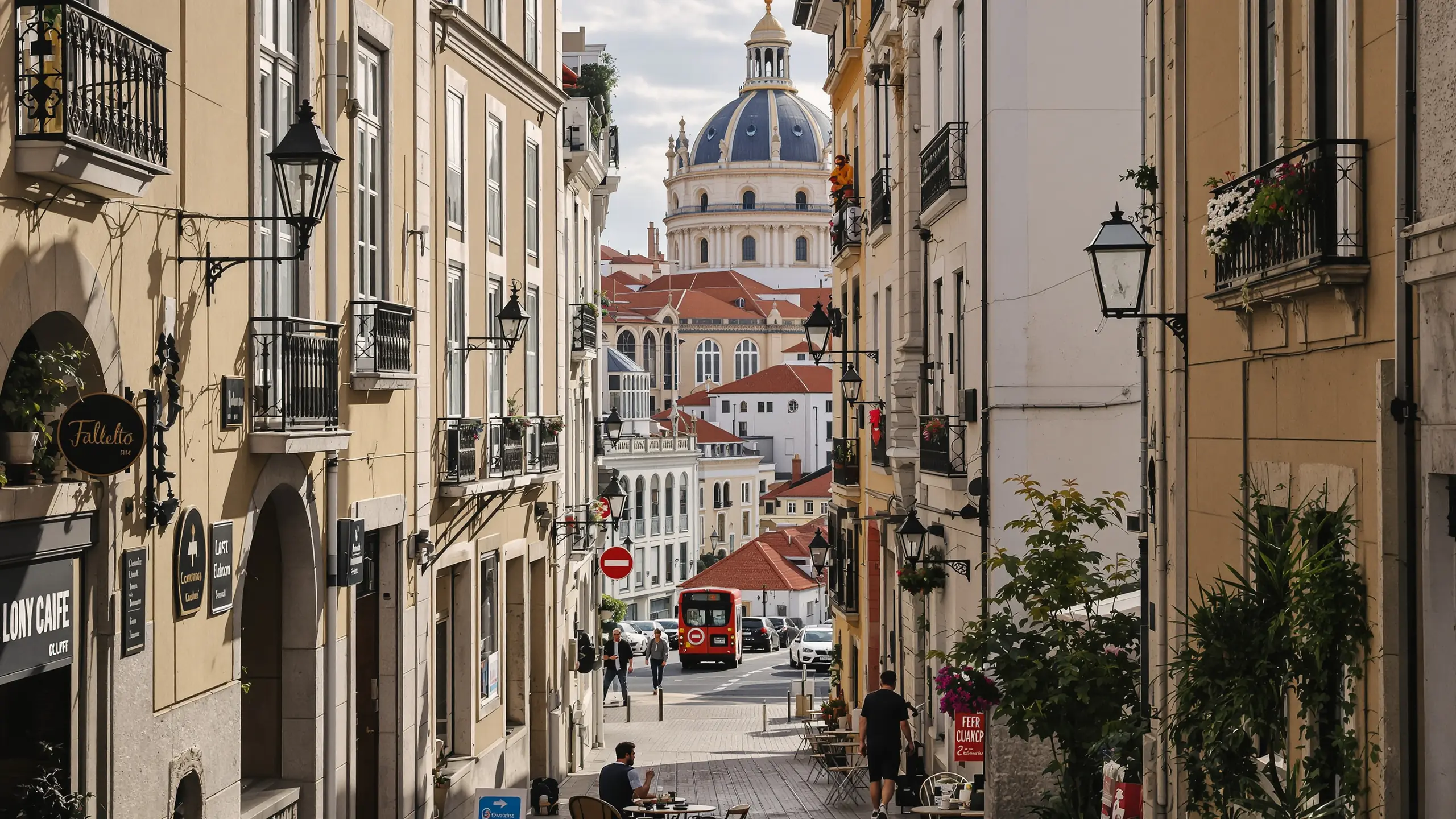
Digital nomad visa Europe: your dream destination awaits, the best countries compared
Europe is calling, and your work-from-anywhere dream deserves more than “someday.” It has more digital nomad visas than any other continent: eleven EU states now run one. Compare them side by side, alongside six non-EU alternatives where the more interesting tax stories play out.
Who needs a digital nomad visa in Europe
Don’t let the European life you’ve dreamed of slip away after 90 days. Without a visa, holders of American, British or Canadian passports, for example, get the Schengen window of 90 days in any 180. Not ready to leave? You need a residence permit, and that’s what these programs offer. EU citizens have free movement and need none of them.
Eleven EU states now have their own residence permit for remote workers, the latest being Bulgaria in December 2025. Your next chapter doesn’t have to stay a daydream. Explore options beyond Europe in our digital nomad visa comparison.
Discover the 11 EU digital nomad visas that could change your life
Your European dream starts here: income thresholds for single applicants, as of August 2026.
| Country | Income threshold | Duration | Notable |
|---|---|---|---|
| Bulgaria | €31,000 a year (about €2,583 a month) | 1 year, renewable once | Newest program, lowest threshold |
| Spain | about €2,850 a month | up to 3 years, renewable | Up to 20% Spanish income allowed |
| Hungary | €3,000 a month | 1 year plus 1 year | White Card, no family |
| Cyprus | €3,500 net a month | 1 year plus 2 years | Quota (most recently 500 places) |
| Greece | €3,500 a month | 1 year, then 2-year permit | Consulate only since February 2026 |
| Croatia | €3,622.50 a month | up to 18 months | No income tax on remote income |
| Portugal | €3,680 a month | 2-year permit, renewable | Plus savings of €11,040 |
| Malta | €42,000 gross a year | 1 year, up to 4 | 10% tax after an untaxed first year |
| Estonia | €4,500 net a month | max. 1 year | Visa only, no path to permanent residence |
| Romania | about €5,500 a month | 1 year, renewable | Highest threshold (3x average wage) |
| Italy | €28,000 a year | 1 year, renewable | Degree or qualification plus experience |
The standouts
Spain: your next chapter, thoughtfully planned. Under the Startup Law (Ley 28/2022), the threshold is 200% of the minimum wage, about €2,850 a month in 2026. Secure a one-year visa through a consulate, or a three-year permit if you are already legally in Spain. Bring your family, earn up to 20% of your income from Spanish clients, and explore the impatriate regime: many newcomers can opt into a 24% flat tax.
Portugal: dream big, but budget for D8, not D7. For remote workers, it’s the D8 visa; the older D7 is for passive income. Look beyond the affordable reputation: you need four minimum wages, €3,680 a month in 2026, plus savings of €11,040. And check your eligibility carefully: IFICI, the successor to the old NHR tax regime, narrowly targets certain qualified activities.
Italy: the dream is real. So is the paperwork. Late to arrive and bureaucratic, yes, but available since 2024. You need about €28,000 a year and, uniquely in the EU, a degree or comparable qualification plus at least six months of proven remote work.
Greece: a fresh start, with a crucial new first step. You need €3,500 a month, plus 20% for a partner and 15% per child, then get a two-year renewable permit. Since 6 February 2026 (Law 5275/2026), you must apply for a national type D visa at the Greek consulate in your country of residence. Don’t arrive expecting to switch: changing from tourist status in the country is no longer possible.
Malta: finally, a clear EU tax answer. Imagine knowing exactly where you stand: since early 2024, permit holders’ remote income is untaxed in the first year, then taxed at a flat 10%. The only EU program with this clarity requires €42,000 gross a year. The permit lasts one year, renewable up to four. Get the details: Malta digital nomad visa and tax.
Croatia: 18 months. A fresh chapter. No income tax on foreign remote income. Stay up to 18 months with €3,622.50 a month or about €65,000 in savings. Remote income from abroad is exempt from Croatian income tax for permit holders, even beyond 183 days. Make this chapter count, but know there is no route to permanent residence.
The rest of the EU field
- Cyprus could be your next chapter: €3,500 net a month, one year plus two, and capped permits (most recently 500). The bigger tax draw? Its 60-day rule and non-dom status, no special levy on dividends and interest for 17 years.
- Estonia pioneered the EU's first nomad visa in 2020: €4,500 net a month buys eligibility for 12 months at most. Know the crucial distinction: e-Residency unlocks company access, not a right to live there.
- Hungary's White Card keeps it lean: €3,000 a month, one year plus one. Your solo adventure awaits, but no family members.
- Romania sets the EU's highest bar at about €5,500 a month. The compelling upside? Stay under 183 days and you are not tax resident there.
- Bulgaria opened applications on 20 December 2025: €31,000 a year (50 times the €620 minimum monthly wage), one year plus one renewal. All income must come from clients outside the EU, the EEA and Switzerland, putting Americans and Britons firmly in its sights. The extra draw? Bulgaria also has a 10% flat income tax.
Non-EU Europe: where the tax stories get exciting
- Georgia: imagine 365 days visa-free with no application, available to many passports. Live on €900-1,500 a month, with a territorial tax system that lets small businesses pay 1% up to a turnover limit. Since March 2026 the self-employed have needed a work permit.
- Turkey: picture keeping more of what you earn for 20 years. Under Law 7582, newcomers not resident in the three prior years are exempt from tax on all foreign income for 20 years. Since July 2026, you must apply to the Turkish tax office by the end of the year you become resident (November or December arrivals: by the end of February). Costs run €1,000-2,300 a month.
- Serbia: your fresh start could begin with 90 days visa-free for many passports, a unified permit for longer stays and a flat-rate tax status for the self-employed. Belgrade costs €800-1,500 a month.
- Montenegro: make room for up to four years with zero tax on foreign income on a nomad visa. The Aliens Act as amended in January 2026 sets no end date. It uses the euro.
- Albania: make your budget go further at €700-1,300 a month, the cheapest country in a European time zone, with the Leje Unike permit and a path to permanent residence. The trade-off: healthcare outside Tirana is unreliable.
- Armenia: breathe easier with 180 days visa-free without an application for many passports. Very safe, at €800-1,300 a month, with micro-business status that cuts tax for small self-employed people to zero. New residence rules took effect on 1 November 2026.
Costs, internet and community
Your dream lifestyle shouldn’t leave you worrying about every bill. Between Sofia and Zurich, monthly budgets differ by a factor of three to four. In Sofia or Budapest, a small apartment costs €300-450, and €700-900 a month in total buys a comfortable life; Belgrade, Tirana and Tbilisi are similar or lower. Lisbon and Porto now run €1,300-1,800, more in central Lisbon, with Barcelona, Athens and the Croatian coast in season in the same league. Dreaming of Paris, Amsterdam, Copenhagen, Stockholm and Zurich? Budgets start at €2,000-2,500, with rent alone €1,200-1,500.
Choose the life you want, not just the strongest Wi-Fi signal. Internet is no longer a deciding factor anywhere on this list: Romania and Lithuania have some of Europe's fastest networks, and Spain and Portugal have rolled out fiber widely. A coworking desk costs €100-300 a month, with the densest scenes in Lisbon, Barcelona, Berlin, Budapest, Tbilisi and increasingly Athens. Ready to find your people and your place? Explore our guide to the best cities in Europe for digital nomads, city by city.
Tax: what the visa pages don’t warn you about
Your nomad visa is not a tax regime. Confuse the two, and the price could hurt. Apart from Croatia (exemption during the permit) and Malta (the 10% regime), the EU programs say nothing about your tax. Spend 200 days in Valencia on a Spanish visa and you are fully taxable in Spain on your worldwide income. Not just what you earn there. Worldwide.
Think staying under 183 days keeps you safe? Don’t bet your finances on it. It’s a rule of thumb, not an escape route. Many countries also look at where your life is centered or whether you have a permanent home available. Counting days alone won’t protect you.
Being resident nowhere isn’t freedom from tax. It’s exposure you can’t afford to ignore. Leaving your home country without a new residence doesn’t make the risk disappear. If you are a US citizen, you also remain subject to US income tax on your worldwide income wherever you live (IRS).
Which country fits your dream life?
- The complete package you’ve been craving: Spain.
- Keep more of what you earn during your stay: Croatia (18 months exempt) or Malta (untaxed first year, then 10%).
- Your dream, with the lowest income bar: Bulgaria, as long as your clients are outside the EU.
- Bring the people you love: Spain or Greece; Hungary does not allow family members.
- More time to build a life you love: Malta (up to four years) and Spain (up to five with renewals) in the EU, Montenegro (up to four) outside it.
- Make your money go further with the lowest costs: Albania, Armenia, Serbia and Georgia.
- Build your future with a long-term tax base: Turkey (with a timely application), Georgia (1%) or Montenegro (0% on foreign income).
Frequently asked questions
Which European country has the easiest digital nomad visa?
Dreaming of your European escape? By income, Bulgaria is your easiest way in: €31,000 a year, about €2,583 a month, as long as your clients are outside the EU, the EEA and Switzerland. Spain is next at about €2,850 a month. Romania? The highest hurdle, at about €5,500 a month.
In which European country do digital nomads pay no tax?
Your freedom. Your income. More of it yours to keep. Croatia exempts foreign remote income from income tax for up to 18 months, while Malta leaves the first year untaxed, then charges 10%. Outside the EU, Montenegro taxes foreign income at 0%, Georgia offers 1% for small businesses and Turkey a 20-year exemption if you apply in time.
How long could you live your dream on an EU digital nomad visa?
Your next chapter could last from one year in Estonia, with no renewal, to several years elsewhere: up to 18 months in Croatia, up to four years in Malta and up to five years in Spain including renewals.
Which European visa is right for your future?
Meeting the thresholds is just the start. Your family, where your clients are and where you end up tax resident determine which program truly fits your life. Get clarity, and peace of mind, with a consultation that narrows the list to the right one.
Book a consultation