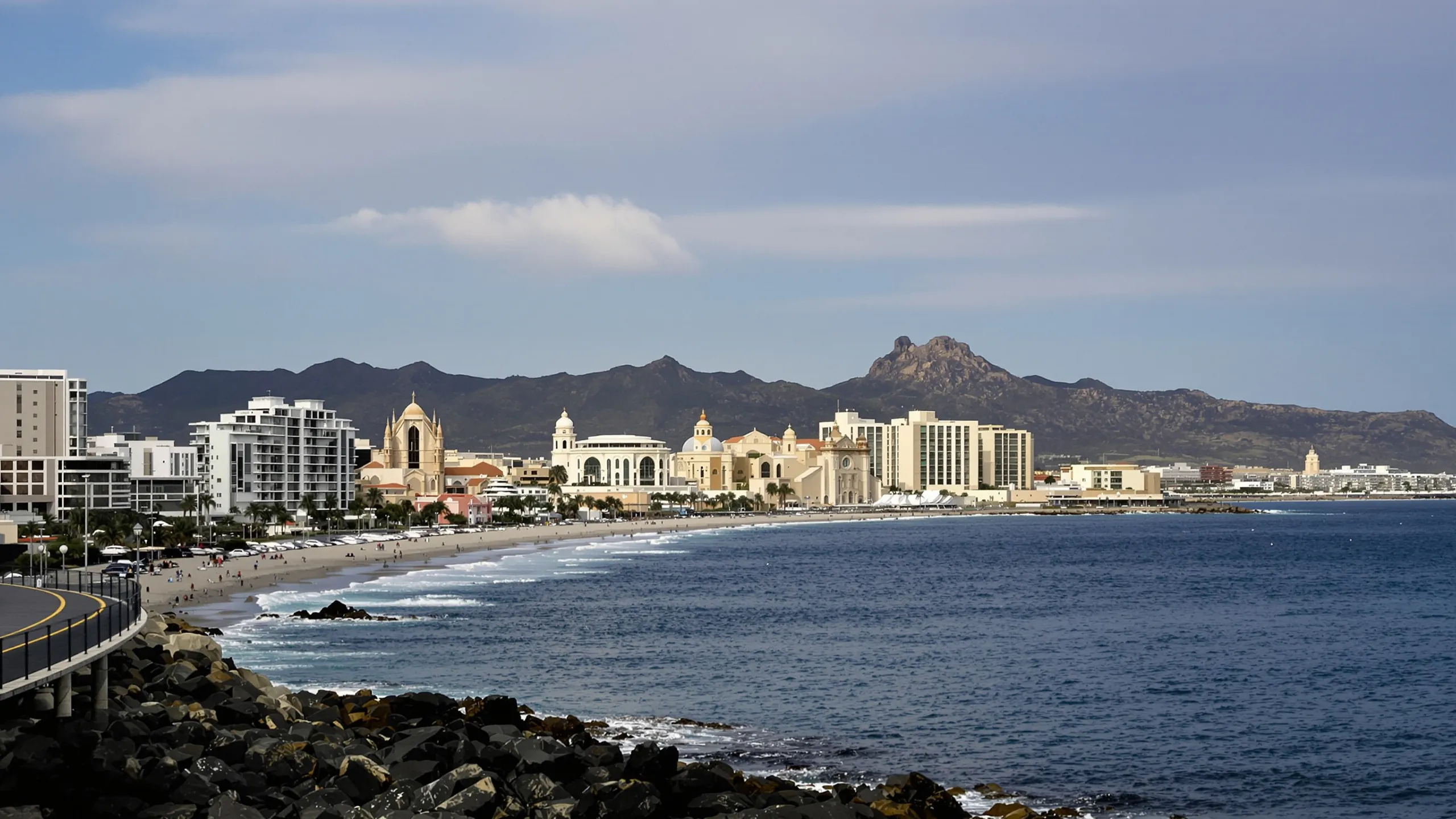
Gran Canaria digital nomad guide: your dream life starts with living and working in Las Palmas
Make winter yours in Las Palmas, one of Europe's biggest winter hubs for remote workers. Find the neighborhood that feels like home, discover what the climate really does, see what a month costs, and know when a long winter turns into Spanish tax residence.
Why Las Palmas is the real reason you’ll want to come
Ask remote workers what draws them to Gran Canaria, and almost always, it comes down to one place: Las Palmas de Gran Canaria, the capital in the northeast. It is the only real city in the Canary Islands, and that makes all the difference.
With around 380,000 inhabitants, Las Palmas is a working Spanish city with a university, a port, hospitals and government offices. Here’s what makes Gran Canaria so irresistible: you get city infrastructure and a city beach in the same neighborhood. No choosing between city energy and beach life. On Tenerife, urban life is spread over several towns, and Fuerteventura and Lanzarote have nothing comparable.
Ready to find your island? Compare them all in our overview of the Canary Islands for digital nomads.
Where to live: Las Canteras, Guanarteme, Triana and Vegueta
Las Canteras and Guanarteme: the nomad zone
Imagine making Playa de Las Canteras your everyday escape: a city beach about 3 km long, with a promenade and shelter from an offshore reef. Right behind it, Guanarteme is the de facto nomad zone. Coworking spaces, cafés with usable WiFi, surf schools and most furnished rooms for remote workers put your new life within reach.
The catch? Guanarteme has the strongest price pressure and the highest turnover. Want more calm for less? Look a few streets inland or around Parque Santa Catalina.
Triana and Vegueta: the old town
Craving a deeper connection? At the other end of the city, Triana and Vegueta draw you into the historic center, with colonial architecture, the Santa Ana cathedral and museums. Live among locals, with Las Canteras 15-25 minutes across town, depending on traffic.
Choose it if your dream is local life, with beach weekends.
The climate, beyond the postcard dream
Imagine a life without frost or heat waves. Las Palmas stays roughly between 20 and 26 degrees C all year. But you deserve the truth behind the sunshine fantasy: the island’s north sits beneath the trade-wind clouds. In summer, a gray blanket regularly settles over the city. Locals call it panza de burro, the donkey's belly.
Then, from October into spring, everything shifts. The north turns mostly sunny and mild. That’s the winter escape you’ve been craving, and why winter is high season for the nomad scene.
Craving more dependable sunshine? The south around Maspalomas and Playa del Inglés delivers, but its package-tourism setup and holiday-rental prices usually make it the wrong base for work. You don’t have to choose: live in Las Palmas, then drive about 45 minutes south on the motorway whenever the sky turns gray.
Coworking and community
Find your workspace. Find your people. Las Palmas has an established coworking scene, with three long-running spaces active in 2026:
- Soppa de Azul in Guanarteme, a few steps from Las Canteras, has been open since 2012. Make room for inspiration with desks, an art gallery and 24/7 access.
- The House in Triana, founded in 2015, brings together around 30 desks, two roof terraces, meeting rooms and symmetric fiber. Monthly memberships were recently roughly €160-250, with app-based 24/7 access on some plans.
- CoworkingC puts you near the beach in the north of the city, with links to nearby coliving houses.
GoCoworking and Sky Coworking form a second tier, giving you more options. Prices change, so check with the provider before you book.
But the real pull? The density of the community. In winter Las Palmas is one of Europe's largest nomad hubs. The local Slack group "Live it up, Las Palmas!" has more than 10,000 members, alongside Facebook and WhatsApp groups, weekly meetups, language exchanges and surf meetups. Arrive alone; within a week, your calendar can be full. The scene shrinks in summer, but that sense of possibility does not disappear.
What a month in Las Palmas costs
Dreaming of life in Gran Canaria? It is no longer cheap, but costs remain moderate by Western European standards. Here’s what to budget for Las Palmas as of August 2026:
| Item | Monthly cost |
|---|---|
| Room in a shared flat, decent and near the beach | €350-550 (listings start around €250-300) |
| Small studio or one-bedroom apartment, normal area | €700-1,000 |
| Furnished apartment with sea view or on Las Canteras | often over €1,000, more in winter |
| Coworking membership (The House) | roughly €160-250 |
| Total for one person with a room, coworking, food and some leisure | about €1,300-1,800 |
Your place in the city comes with a real price tag: after sharp increases in recent years, rents recently averaged a little over €15 per square meter.
Now for a difference you’ll love at checkout: the Canary Islands sit outside the EU VAT area. Instead of VAT, they charge IGIC, with a standard rate of just 7% compared with 21% on the Spanish mainland.
Visas, residence and the 183-day line
Picture it: Gran Canaria, your escape from the everyday. Now make sure your dream starts on solid ground. Gran Canaria is part of Spain, so Spanish rules apply. Citizens of the EU, the EEA and Switzerland need no visa. Everyone else must stay within their own passport's visa-free allowance or use a long-stay route. Non-EU nationals: discover your options in our Spain digital nomad visa profile.
But do not let the excitement hide the line that could cost you most: tax, not immigration. If you spend more than 183 days in Spain in a calendar year, you generally become tax resident there on your worldwide income. The Canary Islands count in full, and the lower IGIC rate does not change income tax. Even before 183 days, a center of vital interests on the island, such as a partner or family living there, can make you resident.
Dreaming of swapping winter for island life from November to April? A visitor staying for that period stays under the threshold. But turn that winter into a whole year while still acting as a visitor, and the financial fallout can hurt long after the sunshine fades. Your home country’s residency rules remain a separate question; one winter abroad rarely changes your status there. Give your dream the protection it deserves with our guide on where digital nomads pay taxes, which explains residence and treaties. US citizen? You remain subject to US income tax on your worldwide income wherever you live (IRS).
What the Beckham regime does and does not do
A flat 24% on employment income? It is easy to see the appeal. But before you build your dream around it, know who the Beckham regime actually serves: incoming employees, including, since its reform, employees working remotely for a foreign employer. Self-employed freelancer? It usually does not fit, except for narrow exceptions for entrepreneurs and highly qualified activities. Become resident in Spain as a freelancer, and you pay the normal progressive rates plus autónomo social contributions.
Internet, flights and a life you’ll love outside work
Internet is one worry you can leave behind. Las Palmas has fiber across the city, with symmetric connections of several hundred Mbit/s standard in apartments. Stay connected for less: prepaid mobile data is cheap.
Flights: Feel connected, not cut off. Gran Canaria's airport is one of the best connected in the Canary Islands, with a denser schedule in winter than in summer. The island runs one hour behind Central European Time.
Outside work: Close your laptop. Come alive. Las Canteras has waves for beginners and intermediate surfers all year, with surf schools at the southern end. Craving adventure? Explore serious hiking country in the interior, from Roque Nublo and the Tamadaba pine forest to the barrancos in the west, at altitudes of almost 2,000 m. Then feel the city’s energy at the February carnival, the city's biggest festival.
What will drive you mad
Three truths the glossy brochures won’t tell you:
- Island fever is real. Gran Canaria is about 50 km across. After three months, those beaches, hikes and familiar faces in the scene can leave you craving something, anything, new.
- The winter rental market is tight. Don’t let the rental hunt derail your dream. Las Palmas has one of the tightest rental markets in Spain relative to local wages, and from November to March you compete with thousands of other winter visitors. Start looking two to three months before you arrive, especially for December to February.
- Tourism stays in the picture. That sea view you’re dreaming of? It’s priced for visitors. If your heart is set on an undiscovered hideaway, you are 20 years too late.
The Gran Canaria digital nomad verdict
Gran Canaria is the island for city people. Why choose between the city you love and the beach you dream of? With the largest community and the best infrastructure, Las Palmas is your strongest base in the Canaries. Tenerife tempts you with more varied landscapes and a scene spread over several towns. Fuerteventura promises the wind, waves and space you crave, but with much thinner infrastructure.
Make it your winter base for two to five months, and settle into one of Europe’s most comfortable options. Dreaming of island-hopping as part of a bigger adventure? The perpetual traveler model explains why every setup still needs a tax home.
Frequently asked questions
Is Gran Canaria good for digital nomads?
Yes, especially if you’re dreaming of a winter base. Las Palmas brings together real city life, a 3 km city beach, fiber internet, established coworking spaces and one of Europe's largest winter nomad communities. Your winter escape? Budget about €1,300-1,800 a month for one person with a room.
Do I become tax resident in Spain if I stay on Gran Canaria?
Dreaming of life on Gran Canaria? Don’t overlook what it could mean for your taxes. Spend more than 183 days in Spain in a calendar year, and you generally become tax resident there on your worldwide income; the Canary Islands count in full. A partner or family living on the island can also make you resident earlier.
When is the best time to work from Las Palmas?
From October to spring. Enjoy mostly sunny, mild days in the north of the island, and feel part of the community when it’s at its largest. In summer, a layer of trade-wind cloud often covers the city, and the scene gets smaller.
Fell for winter in Las Palmas, now dreaming of a move?
A few months on Gran Canaria change nothing for your taxes. A move does. Before you sign a yearly lease, let’s map out Spanish residence, the visa route and your home country's rules, in the right order. Make your next chapter feel exciting, not overwhelming.
Book a consultation