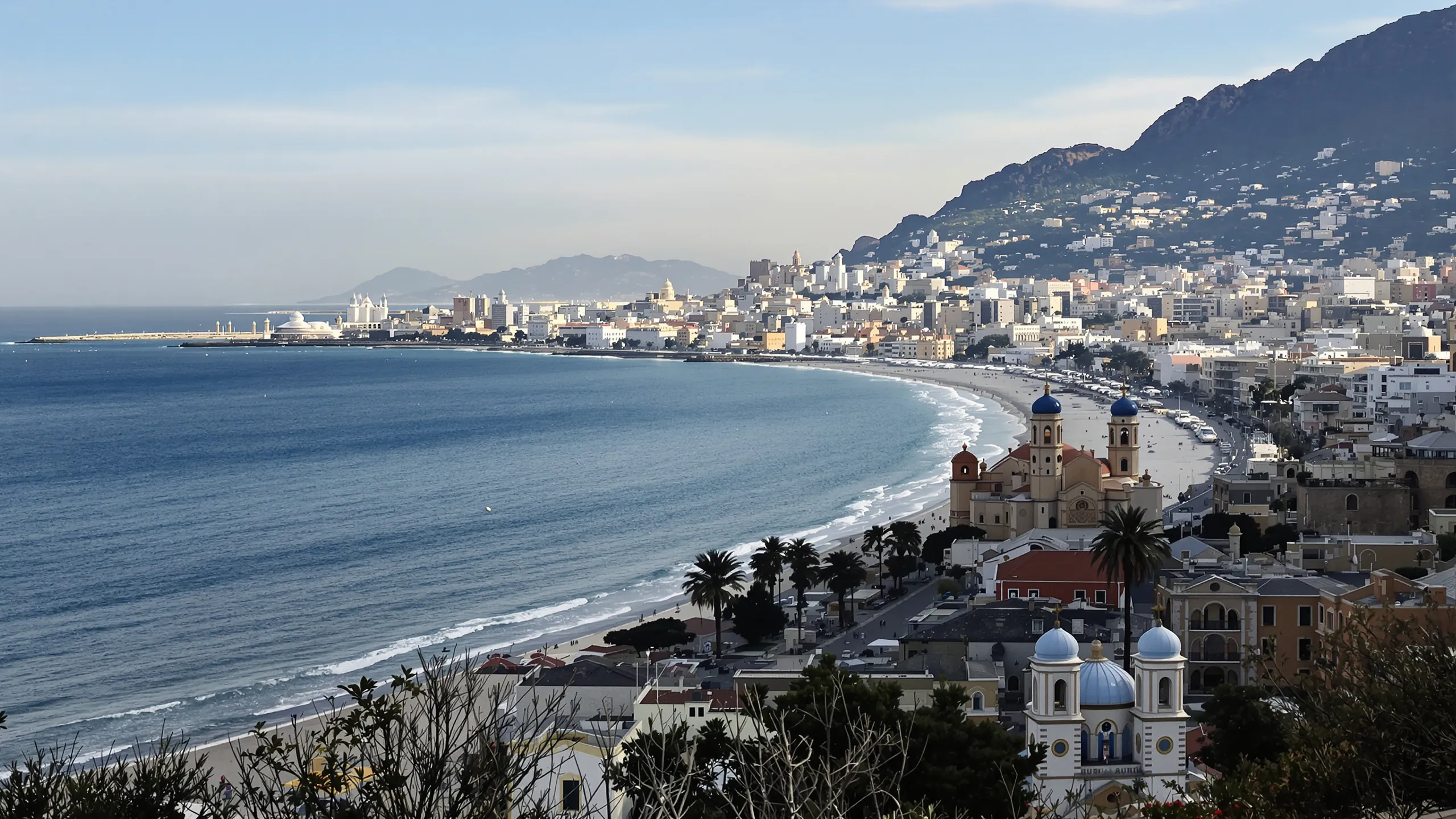
Costa Blanca for digital nomads: find your dream base, and discover what it costs
Your next chapter deserves more than a postcode. The Costa Blanca isn’t one place; it’s 200 kilometers of coast. For remote workers, that means one of the mildest winters on mainland Spain and rents below the Balearics. Find the town that feels like your base, and know exactly where the tax line runs.
Your Costa Blanca digital nomad dream starts in Alicante
If you’re serious about working from the Costa Blanca, Alicante is almost certainly where you’ll land, and where that dream starts feeling real. With about 350,000 people, it’s a full Spanish city: a university, hospitals, public offices, theater and everyday life that’s just as alive in November as in August. And Postiguet beach? Just a five-minute walk from the center.
You don’t have to build your remote-working life alone. Alicante has a small but growing remote work scene, regular meetups, a few serious coworking spaces, a tram covering half the coast and an airport among Spain's five largest. Find the base that feels like you:
- Barrio, the old town, puts you right in the heart of things, if you can live with weekend noise
- Benalúa and the area around the Mercado Central offer quieter, more local living when that’s what you crave
- Playa de San Juan gives you that long sandy beach if it matters more than the center, with a tram link into town
And when you want more? Valencia, Spain's third-largest city, with a much bigger nomad and startup scene, is about an hour and a half away by train. Madrid is about 2 hours 20 minutes away by high-speed AVE.
Find your place on the coast, and somewhere to belong
Altea, Calpe and Moraira are the postcard you ache to step into: Altea's white lanes and blue church dome, the Peñón de Ifach rock above Calpe, villa hills in Moraira. But this dream carries a premium. Holidays and second homes dominate, making long-term rentals scarce and dearer than in Alicante, while the small towns grow quiet in winter. Calpe recently had the highest price per square meter in the province. For couples with a car and a good budget, this could be the escape you’ve longed for. For solo newcomers craving company, less so.
Jávea and Dénia in the north promise that precious feeling of belonging, with an established northern European community with time and money, international schools and marinas. Dénia is a real town, with a ferry port to Ibiza and Mallorca. Both retain more of their energy year-round, but holiday rentals make securing a long-term home harder.
Benidorm deserves a second look, and a fairer verdict. Look beyond the high-rise skyline built for package tourism and discover the only resort on the coast that stays fully open in winter. Its huge stock of rentals makes a long winter stay one of the region's most pragmatic choices. Your coastal escape needn’t end when summer does.
Torrevieja and the Orihuela Costa in the south bring the coastal life you crave within easier reach, with the cheapest coastal rents and one of Spain's largest northern European resident communities: over 33,000 registered foreigners in Torrevieja alone. Picture retirement and winters away, rather than remote work, and remember, you need a car.
Winter is the reason you’ll never want to leave
Imagine swapping winter’s grey skies for the coast around Alicante, with one of the mildest winters on mainland Spain. January daytime temperatures mostly sit at 15-18 °C, winter brings about six hours of sun a day, and the region gets about 300 sunny days a year. More light. More life. More room to breathe.
And you don’t have to figure it all out alone: this coast has decades of wintering infrastructure. Tens of thousands of northern Europeans spend October to April here. Landlords know the winter-rental business, and many holiday flats welcome long-stay guests at significant discounts off-season. For remote workers, winter brings that irresistible balance of climate, price and logistics. Why fight summer holidaymakers for overpriced flats at 35 °C when your winter could look like this?
Dreaming of bringing your home on wheels? Picture the freedom. The campsites between Benidorm and the Orihuela Costa are among Europe's largest winter sites for motorhomes, often fully booked from November to March. If your heart’s already set on combining work and a camper, take the next step with our guide to van life and remote work.
What housing costs in 2026
Think renting is still a bargain? Think again. According to Idealista, Alicante's rental market hit about €12.60 per square meter in June 2026, a record high, up 8.6% in a year. But look at the alternatives: Palma is at about €19 and Barcelona above €23. That difference matters to your budget.
| Item | Alicante, as of August 2026 |
|---|---|
| Room in a shared flat | €350-550 a month |
| Own studio or one-bedroom apartment | €800-1,100 a month plus utilities |
| Torrevieja area apartment | about €600-900 a month |
| Menú del día | €12-15 |
| Monthly bus and tram ticket | about €30 |
| Total with a shared room | €1,400-1,900 a month |
| Total with your own flat | €2,000-2,500 a month |
Finding long-term rents under €900 near the center is getting painfully hard, and the north coast costs even more. But don’t let seasonal prices put you off: long winter stays from October to April in holiday properties are often much cheaper, so negotiate. With rises of over 17% in some towns hitting locals hard, choose long-term and winter rentals, the fairer, cheaper way to stay.
Coworking, internet and getting around
Build a workday you love, with your eyes wide open. The coworking scene is smaller than travel blogs suggest and centers on Alicante. Active as of August 2026:
- ULab, central Alicante: claim your space to thrive with coworking, private offices, meeting rooms, an auditorium and events; day pass about €25, fixed desk about €190 a month, private offices from just under €500.
- Coworking Calpe, Calle la Fuente: feel at home for about €15 a day, fixed desk about €150 a month, private offices from about €250.
- Partners Coworking Calpe near the Peñón de Ifach: give your ambitions room, with about 400 m², phone booths and meeting rooms.
- Coworking Jávea, Carrer Alameda: smaller and community-focused, for that connection you have been missing.
Check prices directly before booking. Craving the buzz of Las Palmas, Lisbon or Valencia? You will be disappointed; in the small towns you will mostly work from home or a café.
Internet is the everyday reassurance that lets you breathe easier: Spain runs one of Europe's best fiber networks, and symmetrical fiber at several hundred Mbit/s is standard in Alicante, Benidorm, Dénia and the larger towns. But do not let your dream home become a daily frustration: in hillside developments behind Calpe, Jávea or on the Orihuela Costa, some homes still connect via radio link or 4G. Check before you sign.
Keep the places you love within reach: Alicante-Elche airport keeps its core routes in the winter schedule, while some seasonal routes pause from November to March. The TRAM runs from Alicante via Benidorm and Altea to Dénia; for the hinterland and the south you need a car.
Visas and the 183-day line
Imagine staying longer in Spain, without giving up the work you love or the freedom you crave. Without an EU passport, your route is the Spain digital nomad visa. EU citizens need no visa but must register after three months and get an NIE, the foreigner identification number you’ll need for almost everything, from securing a lease to opening a bank account.
But protect that dream from an expensive wake-up call: tax. If you spend more than 183 days in a calendar year in Spain, you generally become fully taxable on your worldwide income at progressive rates. Having your center of vital interests in Spain can make you resident even earlier. A November to April stay remains below the line. Let a beautiful winter quietly become a year while acting like a visitor, and the cost can hit painfully hard in hindsight. A winter on the coast does not change your tax status at home either; only a proper move does.
Three Spanish specifics your peace of mind depends on knowing:
- The Beckham regime offers a flat 24% for incoming employees, including remote employees of foreign employers, but usually not for self-employed freelancers.
- Modelo 720 makes reporting foreign assets over €50,000 per category a duty, not a choice, one backed by penalties you don’t want to face.
- Wealth tax: the Comunitat Valenciana grants a €2,000,000 allowance from tax year 2026 (Ley 5/2026), with top rates up to 3.5% above it.
Is Spain only the beginning of the freedom you’re chasing? Explore our guide to the perpetual traveler.
Community, health and how it compares
Finding your people, and feeling at home, matters. The large northern European community on the coast is mostly retirees and second-home owners. If you are 30 and craving people to work alongside, find them in Alicante’s international meetup and WhatsApp groups. Feel reassured by good health care, with university hospitals in Alicante and many private clinics where English is often spoken; as a non-resident you need private health insurance. In Alicante, Spanish is your key to real daily life.
The Costa Blanca is the pragmatic mainland option: embrace a mild winter, a year-round base in Alicante, good fiber and costs below the Balearics, without a real nomad scene. Craving maximum community? Explore Gran Canaria. Dreaming of a Mediterranean city with a bigger budget? Look at Mallorca. For a winter base for two to five months, the Costa Blanca is one of the most rational choices around, and an easy one to get excited about.
Frequently asked questions
Is Alicante good for digital nomads?
Yes, as a base, it’s easy to love. A full city with year-round life, fiber, a growing remote work scene with meetups, coworking from about €25 a day and an airport among Spain's five largest. Just don’t expect a nomad scene on the scale of Las Palmas or Lisbon.
What does it really cost to live your digital nomad dream in Alicante?
Your dream life could cost about €1,400-1,900 a month with a room in a shared flat, or €2,000-2,500 for the freedom of your own apartment, as of August 2026.
When do I become taxable in Spain?
Dreaming of your new life in Spain? Don’t let an unexpected tax bill spoil it. Generally, you become taxable after more than 183 days in a calendar year, or earlier if your center of vital interests is in Spain. That means your worldwide income is then taxed at progressive rates. Know where you stand, protect your peace of mind.
Wintering on the Costa Blanca, or moving there?
Your dream winter escape and a move to Spain come with very different visa and tax consequences. Get clarity with a consultation, and plan the stay you want, without letting uncertainty overshadow your dream.
Book a consultation