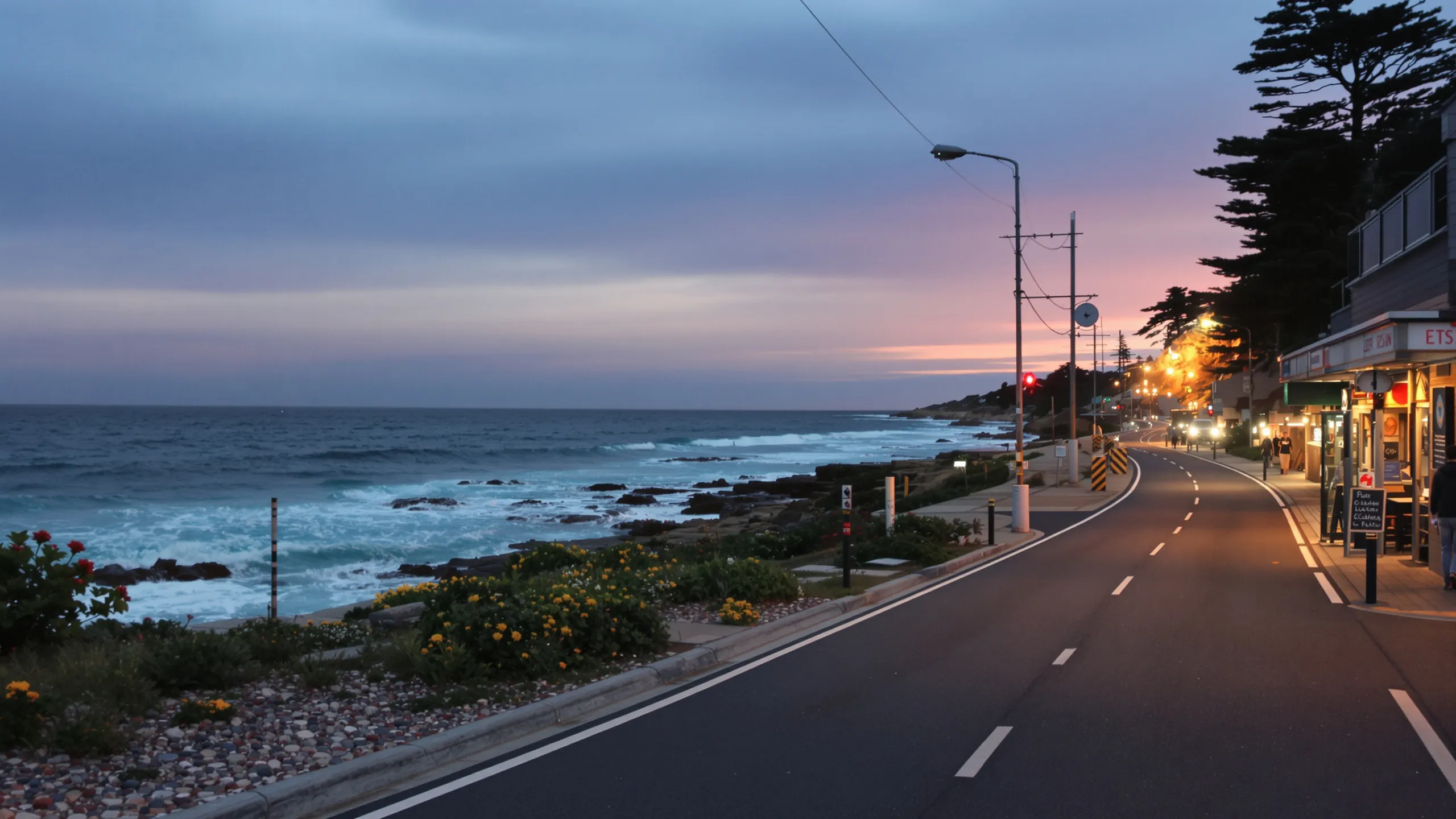
Digital nomad Australia: make your dream a reality, even without a nomad visa
Australia is on almost every nomad wish list, but almost every article sells you a half-truth. Don’t let the dream blindside you. Get the honest picture: the visa options, the costs, the tax traps and the time zone, as of August 2026.
Visitor visas: three months, officially without work
Australia is easy to fall for. But before you build your dream around it, hear this: Australia has no digital nomad visa, and remote work on a visitor visa is a legal gray zone. No permit says: come, work for your clients abroad, stay a year. Anyone promising that freedom is selling you a visitor visa dressed up as a dream.
For short stays, your passport holds the key, and determines your route. The eVisitor (subclass 651), mainly for European passports, is free, applied for online, valid for twelve months and allows multiple entries of up to three months each. The Electronic Travel Authority (subclass 601) is the counterpart for other eligible passports, applied for through an app with a service fee of AUD 20.
Stop here. Your plans deserve more than a quick skim. Both allow tourism and business visitor activities such as meetings, conferences and negotiations. Working in Australia is expressly prohibited. That rule targets people entering the Australian labor market. Sitting in a Melbourne café writing for a client abroad is simply not addressed. In practice it is tolerated every day, but tolerance is not permission, and Home Affairs has issued no statement allowing it.
So what does that mean for the trip you cannot stop imagining? If you come for three months, live on money from abroad, serve no Australian clients and truthfully state tourism at entry, you are where practically all nomads in Australia are. But that does not erase the risk: chains of entries and exits that look like living and working in Australia can trigger questions or, at worst, refusal of entry. Do not gamble with your plans. Treat Australia as a stop on your route, not as a base on a visitor visa.
Working holiday: Australia's real nomad visa
That dream of living and working in Australia? It doesn’t have to stay a dream. There’s a real route; it just has a different name. If your country has an arrangement with Australia, the Working Holiday visa (subclass 417) unlocks twelve months with full work rights. On 1 July 2026, Australia raised the age limit to 35 for Germany, Finland, Cyprus and South Korea, joining Canada, France, Ireland, Italy, Denmark and the United Kingdom. Your age at application counts, so you have until the day before your 36th birthday to turn “one day” into your departure date.
- Fee: AUD 840 since 1 July 2026; wait to apply and you’ll pay more.
- Funds: aim for about AUD 5,000 plus a return ticket as a guideline, your starting point for something unforgettable.
- Employers: usually no more than six months with one employer, but that’s irrelevant if you work remotely for your own clients.
- Extension: why stop at one year? Make it 12 plus 12 plus 12 months. The second year needs 88 days, the third 179 days of specified work in regional areas, typically farming, harvest, construction, fishing or tourism in the north. British citizens are exempt under the free trade agreement.
From another country? Don’t write off your dream. Your opening could be the Work and Holiday visa (subclass 462). It is capped by country, quotas reset every 1 July, the age limit is 18-30, and extra evidence such as tertiary education is required. But don’t let your age window close while you’re still saying “someday”: over the age limit, only student visas or skilled migration remain, routes for emigrating, not for nomads.
Tax: the hidden cost you cannot afford to underestimate
On a visitor visa for under three months, you will normally not become tax resident. That is reassuring, but do not let tax catch you off guard. Current law applies a 183-day test, among others: more than half of the Australian tax year, which runs July to June, generally makes you resident unless your usual place of abode is shown to be abroad. Australia has been planning a bright-line reform since its 2021/22 budget, with 183 days triggering residence automatically and 45 days plus certain ties possibly enough. As of August 2026 it is still not law. And travelling does not make your tax obligations at home disappear; read the perpetual traveler guide before you go. If you are a US citizen, you remain subject to US income tax on your worldwide income wherever you live (IRS).
On a working holiday, protect your budget from an unwelcome surprise: the backpacker tax applies: a flat 15% from the first dollar up to AUD 45,000 if your employer is registered, with higher non-resident rates above that and no tax-free threshold. But one exception could make a real difference. After the High Court's Addy ruling of 2021, the flat tax breaches the non-discrimination clauses in certain tax treaties. Eight countries have such a clause: Germany, the United Kingdom, Japan, Finland, Norway, Chile, Turkey and Israel. Their citizens who become Australian tax residents, for example by living and working there for a full year, can claim resident rates, including the AUD 18,200 tax-free threshold. Do not overlook what you could claim.
Employers also pay 12% superannuation into a pension fund on top of wages. After you leave for good, you can claim it through the DASP (Departing Australia Superannuation Payment), but brace yourself: payouts to former working holiday makers are taxed at 65%. Of AUD 3,000 saved, you see just over 1,000. That deduction hurts, but the remaining money is still worth claiming. Claim it anyway: unclaimed balances go to the tax office after six months.
Australia budget for digital nomads: what does your dream really cost?
Stop just dreaming about Australia, start making it yours. Budget with confidence: figures in Australian dollars (1 AUD is roughly €0.60), as of 2026. Rent is quoted per week.
| Item | Cost |
|---|---|
| Room in a share house, inner Sydney | AUD 350-500 a week; CBD or Northern Beaches up to 575-600 |
| Room in Melbourne | average about AUD 265 a week; inner north 200-300 |
| Room in Brisbane, Adelaide or Perth | AUD 220-350 a week |
| Hot desk | Sydney AUD 450-700, Melbourne AUD 300-550 a month |
| Monthly budget | Sydney AUD 2,800-4,000; Melbourne and Brisbane AUD 2,200-3,200 |
A flat white costs AUD 5-6, a simple meal out AUD 20-30, a hostel dorm bed AUD 35-60 a night. That same money buys you two to three months in Southeast Asia. You don’t choose Australia for the price. You choose it because something in you refuses to settle for anywhere else.
The time zone trap
The east coast runs on UTC+10, and UTC+11 during Australian summer time (October to April). Suddenly, Sydney, Melbourne and Brisbane are eight to ten hours ahead of Central Europe, and your evenings belong to your European clients. Their 10 am call? That’s 6-8 pm for you. Their 3 pm meeting? You’re still working at 11 pm or 1 am. You can make it work if you are asynchronous and bundle calls into one or two evening slots. But if you must follow the European working day live, this is not the freedom you came for.
Perth, on UTC+8, is the kindest option for Europe, six to seven hours ahead. Working with clients in Asia or the Americas? Compare the offsets with their business hours before you commit to protect the lifestyle you’re making this move for.
Internet, seasons and van life
Don’t let a dropped connection steal a moment of your Australian dream. The national NBN network delivers a median of about 120-135 Mbps in 2026, up to 1 Gbps on modern fiber, but sometimes only 25-100 Mbps on older fibre-to-the-node lines. Ask about the connection type before you book. Mobile is your reliable lifeline: 5G in the cities is among the fastest in the world, with real speeds of 300 Mbps and more. Telstra has the best coverage, alongside Optus and Vodafone; away from the coast, Telstra or satellite is your only option.
You’ve dreamed of that sunshine, so don’t arrive in the wrong season. Australia is two countries in season terms. The south is best from November to March; the tropical north is best in the dry season from May to September. With only three months, choose your region and truly live it: Sydney to Cairns is 2,400 kilometers.
Wake up somewhere new. Feel that open-road freedom. Van life is real here, but budget for the dream. Campervans rent for AUD 40-100 a day off season, fuel costs about AUD 2 a liter, and used backpacker vans sell for about AUD 8,000-15,000. Caravan parks with power cost AUD 30-60 a night, and sleeping in vans is largely banned in the cities. Don’t let internet away from the coast derail the adventure you’ve been longing for: get ready with our van life remote work guide.
Who Australia works for
Australia is worth it if your passport gives you a working holiday visa, your chance to unlock what no nomad visa offers: up to three years of legal stay with full work rights in an English-speaking country. It also works if your work is asynchronous or your clients are in Asia or the Americas. But don’t chase the dream if you must work live with Europe every day, your budget is under €2,000 a month, or you want a long-term base. Australia taxes residents on worldwide income; build your base elsewhere and visit Australia. Protect your adventure before it starts: arrange money and cover with banking for digital nomads and health insurance for digital nomads.
Frequently asked questions
Does Australia have a digital nomad visa?
No, but don’t give up on your Australian dream. Your real options are the eVisitor or ETA for up to three months per entry without work rights, or the working holiday visas (subclass 417 or 462) with full work rights, depending on your passport and age.
Can I work remotely for foreign clients on an eVisitor or ETA?
Dreaming of working remotely from Australia? Know the limits: it is not regulated. Working in Australia is prohibited; remote work for foreign clients is tolerated in practice, without any official permission. Keep stays short, serve no Australian clients and answer truthfully at entry.
Do I get my superannuation back when I leave?
Yes, don’t leave your money behind! Make a DASP claim after your final departure. But here’s the hard truth: payouts to former working holiday makers are taxed at 65%, so you keep only about a third of the 12% employer contributions.
Australia is your stage. Your base is elsewhere.
Your Australian dream deserves a clear plan: the right visa, a residence that holds, and tax at home sorted. Don’t leave it to chance: a consultation helps you prepare before you fly.
Book a consultation