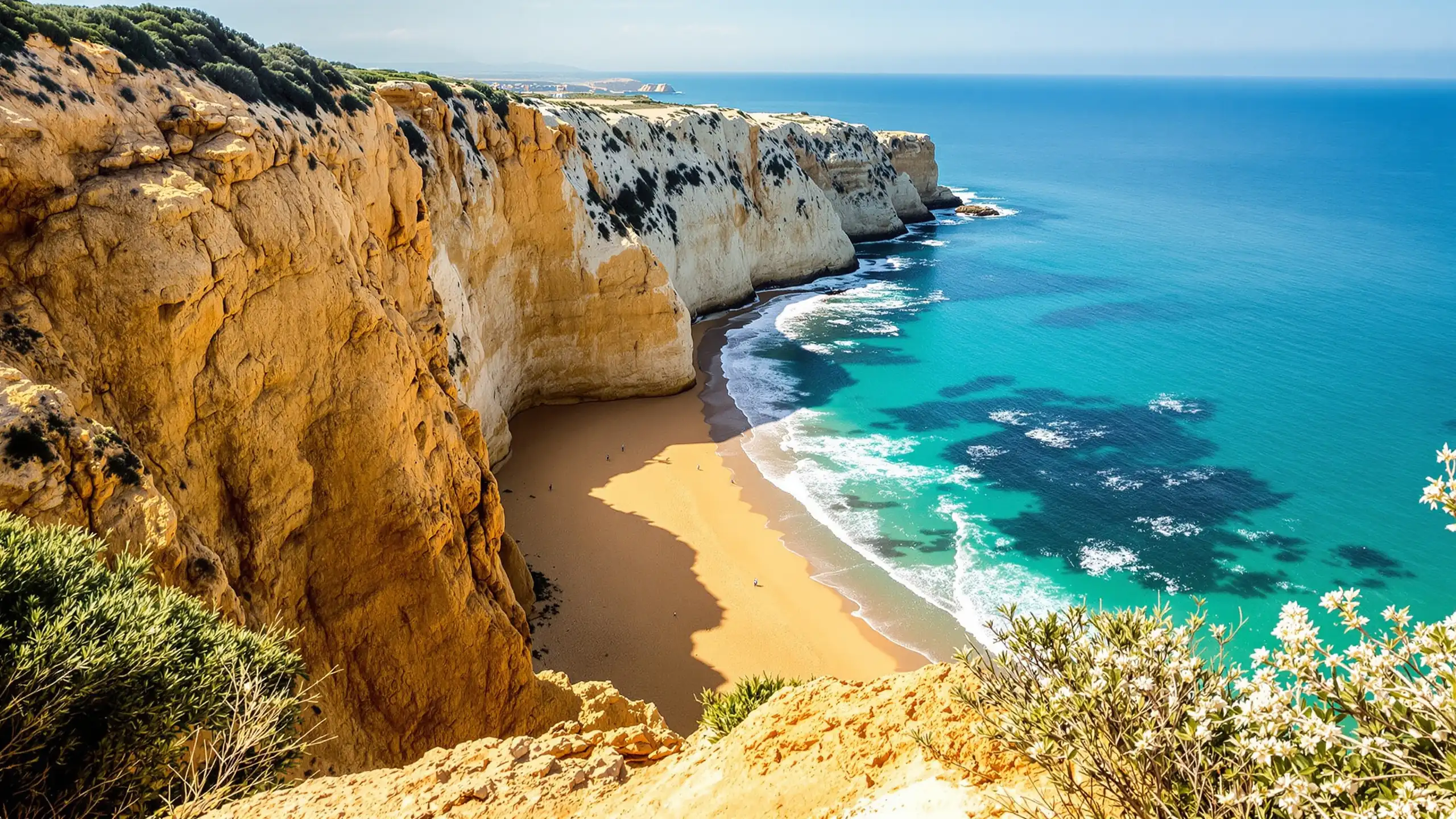
Algarve digital nomads guide: fall in love with the coast, not the gloss
Imagine mild winters, one of Europe's sunniest coasts, fiber in small towns and a community that runs itself in Lagos. A life you could fall in love with, but prices have risen, the tax regime for newcomers is gone and Portugal has tightened citizenship rules.
Who needs which visa
Imagine trading another grey winter for the Algarve. You’re not alone. It has been Europe's favorite winter retreat for years, attracting a growing number of remote workers. Ready to join them? Here’s the full picture as of August 2026.
Citizens of the EU, the EEA and Switzerland need no visa; after 90 days they register with the municipality (CRUE registration). Everyone else needs a long-stay route, and for remote workers that is usually the D8, Portugal's digital nomad visa. Here’s what your dream takes in 2026:
- Income: four times the minimum wage from remote work. With a minimum wage of €920, that is €3,680 a month.
- Savings: twelve minimum wages, about €11,040, in an account.
- Both figures rise with every minimum wage increase; €970 is already agreed for 2027.
Don’t let your Algarve winter stay a “one day” dream. The D8 offers two variants: a temporary one-year visa that does not grant residence, and the actual residence route through the immigration agency AIMA. Plan on AIMA's backlogs costing you a transition year, not your dream. Turn longing into a plan: explore the full process in our Portugal digital nomad visa profile.
The new citizenship rules
Dreaming of a Portuguese passport? Organic Law 1/2026, in force since 19 May 2026, doubled the waiting time for Portuguese citizenship from 5 to 10 years. EU and CPLP nationals need 7 years, and the clock only starts when the first residence permit is issued. Permanent residence after 5 years is unchanged. Don’t build your future on an outdated promise: anyone selling the Algarve as a fast track to an EU passport is selling the rules of 2024. Your future deserves the truth.
Lagos, Faro, Tavira: where Algarve digital nomads live
Your Algarve dream deserves the right home. Along a strip of coast about 150 km long, wildly different places promise wildly different lives. Where will yours begin?
Lagos is the nomad center. Finally, find your people. This western town brings an old town, the cliffs of Ponta da Piedade and serious surf spots together with the region's densest community. Coworking spaces. Weekly meetups. An international crowd that stays through winter. That feeling of belonging? It comes at a price. Lagos is now one of the more expensive places in the Algarve, and in July and August, beach tourists compete with you for every apartment.
Faro is the underrated everyday city. Stop chasing the scene. Start building a life that works. The regional capital puts the airport, a university, a hospital, year-round infrastructure and noticeably more reasonable rents within reach. Put work first, and enjoy the best mix of connections and cost, with the Ria Formosa lagoon right on your doorstep.
Tavira is the quiet east: cobblestones, a Roman bridge, salt pans and people spending the winter, not networking. Longing for months of deep focus? Find your escape here, but expect little community or nightlife.
Between them, Portimão offers a functional mid-sized town, while Albufeira is a package-tourism hub you are better off avoiding as a work base. Farther west, Sagres and the Costa Vicentina speak to something deeper: that hunger for wind, waves and space over an office chair.
Timing changes everything: October to May belongs to residents and long-stay guests, June to September to tourism. Those winter monthly rents you can negotiate? Summer sweeps them away into holiday rentals. Plan for the life you actually want.
Costs: no more guessing, no nasty surprises
Dreaming of the Algarve? Don’t let yesterday’s “cheap” reputation catch you out. Those days are over. Know what to expect with figures for Faro, as of July 2026:
| Item | Faro |
|---|---|
| One-bedroom apartment, center | around €900 a month |
| One-bedroom apartment, outside the center | around €800 a month |
| Meal at a simple restaurant | €12 |
| Cappuccino | under €2 |
| Living costs without rent, one person | around €670 a month |
Dreaming of your Algarve escape? Rents in Lagos are noticeably higher, while Tavira and the hinterland offer lower rents. As a single person, budget €1,700-2,400 a month, with more needed in high summer at the hotspots.
Bring your ambition: the excellent work infrastructure is ready for you. Portugal is among Europe's leaders in fiber; fast connections are standard even in small towns, and mobile coverage along the coast is dense. Find your workday rhythm at coworking spaces in Lagos, Faro and Portimão, typically €100-180 a month, or enjoy the laptop-friendly café culture. The region runs one hour behind Central European Time.
Taxes: choose a better life, not a tax escape
Dreaming of Portugal? Make sure you’re chasing the lifestyle, not an outdated tax promise. Portugal's NHR regime has been closed to newcomers since the end of 2023, and the transition periods have expired. Its successor, IFICI, offers a 20% flat rate, but only for defined activities such as research, university teaching and certain highly qualified roles. The typical freelancer with foreign clients does not qualify. As a resident in Portugal, you pay regular rates: progressive up to about 48% on earned income and a flat 28% on capital income.
Protect your fresh start by getting one crucial detail right. Every nomad tax plan starts not with what Portugal offers, but with whether your exit from your home country is clean. If you keep your home and residence there and spend the winter in Lagos, nothing changes for your taxes. If you really move, you become resident in Portugal. If you are a US citizen, you remain subject to US income tax on your worldwide income wherever you live (IRS). Build your move on clarity, not wishful thinking: our page on taxes for digital nomads sorts out the basics.
Daily life: beyond the postcard, into the real Algarve
Finding a home is the biggest hurdle. The coast caters to holiday rentals, long-term leases take negotiation, and locals feel the pain of displacement, which has cooled the welcome for newcomers in some places. Summer is packed and loud; July and August are second-choice months for working in the hotspots. Stay all year, and two Algarve realities hit home: houses never built for winter cold become damp and chilly without heating, and exploring the hinterland is difficult without a car.
But here’s what makes the region so hard to resist: sitting outside in January, an Atlantic coast made for surfing, hiking and cycling, low crime, good health care with English-speaking staff and a well-connected airport in Faro. These are the everyday comforts that make a place feel like home. English gets you through daily life, while basic Portuguese opens doors beyond the tourist towns. Staying longer? Make a full health insurance policy part of your setup; see health insurance for digital nomads.
Work and community
Imagine finding your people when other summer destinations fall silent. The Algarve community offers something rare: it is strongest in winter. From October to May, Lagos coworking spaces fill with winter residents, surf houses bring course guests and remote workers together, and weekly meetups keep going through January. The scene is more international than many Spanish equivalents, with many people who stay, not just pass through.
Surfing before your first call is logistics, not a pose: the spots from Sagres to Arrifana are half an hour's drive from Lagos. Picture coastal trails along the Rota Vicentina and winter almond blossom instead of slush. Just make room for a car: realistically, it belongs in the budget.
Your next chapter needn’t start with a leap of faith: the Algarve is small enough to test before you commit. Two weeks with stops in Lagos, Faro and Tavira are enough to find your town before you sign a winter lease.
Who the Algarve suits
Dreaming of European standards, the Atlantic and a ready-made community? The Algarve could be the place you’ve been longing for, if your budget covers prices that reflect its popularity. From October to May, it truly comes into its own as a winter base. Chasing a tax break or Southeast Asian costs? It’s less likely to be your match. Find where you belong in Portugal: compare our guides to Lisbon and the Azores.
Frequently asked questions
Do I need a visa to live in the Algarve?
Your dream of Algarve living starts here. EU, EEA and Swiss citizens do not need a visa; they register with the municipality after 90 days. Other nationals need a long-stay route, usually Portugal's D8 digital nomad visa, which requires remote income of €3,680 a month in 2026.
Is the Algarve still cheap?
That old bargain dream? Not anymore. In Faro, a one-bedroom apartment costs around €800-900 a month, more in Lagos, and summer sees long-term rentals disappear into holiday lets. But that Algarve life you’re dreaming of? A single person can still live well on €1,700-2,400 a month.
Are there still tax benefits for newcomers to Portugal?
Dreaming of a fresh start with a lighter tax bill? Not for the typical remote worker. NHR has been closed to newcomers since the end of 2023, and its successor IFICI covers only defined activities. Residents pay regular rates of up to about 48%. Know before you commit.
How fast can I get a Portuguese passport?
Dreaming of a Portuguese passport? The wait is now much longer. Since Organic Law 1/2026, citizenship requires 10 years of legal residence (7 for EU and CPLP nationals), counted from the first residence permit. Your more realistic milestone? Permanent residence after 5 years.
Ready to make Portugal your next chapter?
D8 or temporary visa, AIMA timing, your exit from your current tax residence and what Portugal then taxes: the right order can turn overwhelm into relief. Don’t leave your next chapter to chance. Let's go through your case.
Book a consultation