🇧🇷 Digital Nomad Brazil Guide: Live and Work Where You Feel Alive
Your dream life in Brazil could be closer than you think. Four to five hours behind central Europe, fast fiber and a nomad visa with one of the lowest thresholds anywhere. Discover what life, costs, safety, the visa and taxes look like, and imagine your next chapter.
At a glance
| Monthly budget | €1,100-1,800 in Florianópolis; €1,300-2,100 in São Paulo or Rio |
|---|---|
| Internet | Fiber 300-700 Mbps for 100-200 reais (about €17-34) a month |
| Time zone | UTC-3, no daylight saving time since 2019 |
| Best season (Florianópolis) | October-April |
| Longer stays | Digital nomad visa, 1 year, renewable for 1 more year |
| Income threshold | US$1,500 a month or US$18,000 in funds |
| Tax on foreign income | Residents (from day 184 in 12 months) taxed on worldwide income up to 27.5% |
Why Brazil works for remote workers
Stop letting time zones steal your life. Brazil solves a problem most Latin American destinations cannot. With clients in Europe, Mexico puts you up to eight hours behind them and Colombia up to seven. Brazil puts you four or five. That 2 pm call in central Europe? It’s 9 or 10 am for you. You both work a normal day. Nobody gets up early. Nobody stays up late. You get your life back.
And then there’s everything you’re working for: São Paulo has the best food and the densest cultural life in the southern hemisphere. Florianópolis has beaches and a growing tech scene. The trade-offs are real: a security situation that demands attention, and Portuguese as a must.
Everyday life in Brazil
Brazil is warm in every sense, and you feel it in every embrace. People are affectionate, physical and wonderfully uncomplicated: you hug hello, talk a lot and laugh loudly. Life spills into the evening, with dinner from 8 pm and going out from 10 pm, even as the working day starts early.
Everyday convenience is another welcome surprise. Pix, the instant payment system, is one of the best in the world: free transfers around the clock by QR code, accepted everywhere from street vendors to car dealers. Delivery and ride apps work everywhere and are cheap, making daily life feel easier. The catch? Anything involving authorities or banks stays tedious; Brazilian bureaucracy is notorious.
Where to build your dream digital nomad life in Brazil
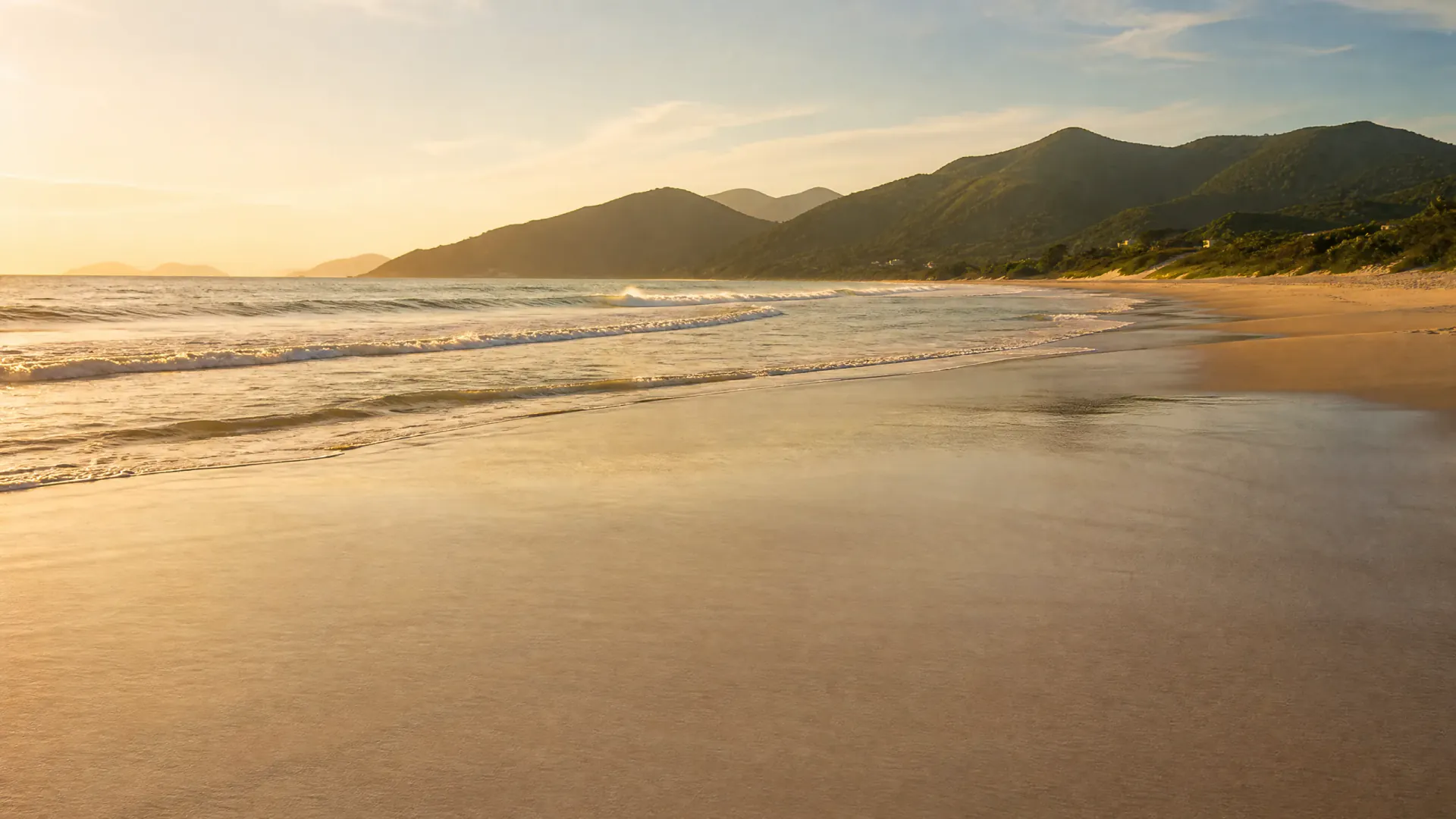
Florianópolis, Floripa for short, is the obvious choice when you want remote work to feel like freedom. Picture an island in the south with more than 40 beaches, Atlantic rainforest, a growing tech and founder scene and one of the highest living standards in Brazil. Find your feet in Lagoa da Conceição, the hub for newcomers; slow down in quieter, more family-oriented Campeche; or head north for a more touristy atmosphere. Even better? Floripa is considered one of the safest cities in the country.
São Paulo makes you feel everything: 20 million people, the economic center of South America, culture on the scale of New York and a world-class food scene. Start with Vila Madalena, Pinheiros and Jardins. Yes, it is ugly, loud and overwhelming, but for many, that electrifying intensity makes it the most interesting city on the continent.
Rio de Janeiro is the kind of place that takes your breath away, arguably the most beautiful of all the cities we profile, with mountains, sea, rainforest and city packed together. Look to Botafogo, Ipanema and Santa Teresa. But keep your eyes open: Rio also has the most difficult security situation of the three.
Belo Horizonte deserves your attention: underrated, hilly, strong on food, much cheaper and alive with nightlife. Craving small-town coastal life instead? Discover Paraty, Ubatuba and Búzios.
Internet and coworking
Forget Brazil’s reputation: getting connected here is a welcome surprise. Fiber has expanded fast, with connections of 300-700 Mbps costing just 100-200 reais a month, roughly €17-34. Enjoy very good coverage in the cities and in coastal places like Floripa.
Stay connected without stretching your budget: mobile internet is widespread and cheap. Just remember, a Brazilian SIM requires a CPF, the Brazilian tax number. You’ll also need it for bank accounts, leases and many online services. Foreigners can apply for one, so make it one of your first steps after arrival.
Find your focus in São Paulo and Florianópolis, with plenty of good coworking spaces and fixed desks at 500-1,200 reais a month. Floripa’s tech scene gives it an unusually high density of serious spaces, so you can find somewhere that means business.
Food
Forget everything you thought you knew about Brazilian food: there’s so much more to fall in love with than barbecue and bean stew. São Paulo has the best restaurant scene in Latin America: world-class Japanese food, thanks to the largest Japanese community outside Japan, alongside Italian, Lebanese and modern Brazilian cooking. Every meal is another reason to stay.
Then come the regional flavours you’ll dream about long after you leave: Bahia’s Afro-Brazilian cuisine, rich with dendê oil and seafood; the cheese and pork of Minas Gerais; and Amazonian fish and fruit you will not find anywhere else. Even everyday meals feel like a discovery, and they’re cheap and good. A prato feito lunch costs 25-45 reais, about €4-8, while pay-by-weight buffets are one of gastronomy’s best inventions. Expect spectacular fruit, local coffee, and vegetarian options growing fast in the big cities. Come hungry. Leave in love.
People and language
Brazilians are open, warm and extremely sociable, and that warmth draws you in. Connecting feels easy, invitations come quickly, and strangers are welcomed into the fold. You don’t have to stay an outsider.
Portuguese is non-negotiable, and learning it changes everything. English is spoken much less in Brazil than in many neighboring countries, even in São Paulo. Spanish helps you understand, but Brazilians expect and appreciate you learning Portuguese. Make that effort, and you experience a completely different country.
Looking for your international nomad crowd? The scene is densest in Florianópolis, though overall it is smaller than in Medellín or Mexico City.
What does it really cost to live in Brazil?
Your life, your budget, monthly costs in Brazilian reais (BRL):
| Item | Florianópolis | São Paulo | Rio de Janeiro |
|---|---|---|---|
| Furnished studio, good location | 2,500-4,500 | 2,800-5,000 | 2,800-5,000 |
| One-bedroom apartment | 3,500-6,500 | 4,000-7,500 | 4,000-8,000 |
| Groceries and eating out | 1,800-3,200 | 2,000-3,800 | 2,000-3,500 |
| Coworking, fixed desk | 500-1,200 | 600-1,400 | 550-1,200 |
| Fiber internet | 100-200 | 100-200 | 100-200 |
| Getting around | 400-900 | 400-900 | 400-900 |
| Private health insurance | 400-1,200 | 400-1,200 | 400-1,200 |
Imagine the life your money could buy: realistically, you spend €1,100-1,800 a month in Florianópolis and €1,300-2,100 in São Paulo or Rio. The real has weakened against the euro for years, making Brazil noticeably cheaper for anyone earning in euros. That’s exciting breathing room, but budget with your eyes open: inflation is a constant concern, and rents are indexed every year.
Your fresh start deserves solid foundations. A regular Brazilian lease usually requires a guarantor, rent insurance or a deposit of several months' rent, a tough hurdle without a local credit history. Expect pricier furnished short-term rentals for the first months. The next step towards feeling settled? You can open a bank account once you have a CPF and a residence permit.
Safety
Your peace of mind matters, but in Brazil, staying safe starts with facing the facts. Violent crime is high, with large differences between cities and neighborhoods. Robbery, often armed, is the dominant crime. If it happens, hand things over. Do not argue. Nothing you carry is worth your life. Keep your phone out of sight on the street, and leave your watch, camera and jewelry at home.
Want more peace of mind day to day? Florianópolis is one of the safest cities in the country and largely trouble-free. São Paulo demands attention in certain areas and at certain times. Rio is the hardest of the three, with occasional clashes that can affect whole districts for hours.
Protect yourself with simple habits: take Uber instead of street taxis, do not walk or wait at traffic lights at night, take no valuables to the beach, do not enter favelas without a local guide, and use ATMs only indoors. Follow those precautions, and Florianópolis is practically trouble-free and São Paulo a manageable risk. Start with our safety tips for digital nomads.
Health
Your health deserves peace of mind. Private healthcare in São Paulo is among the best in Latin America, with several hospitals of top international standard. Florianópolis and Rio have good private hospitals too. But the public system is a separate world. Private cover is essential, not just for reassurance, but as a requirement for the nomad visa.
Want excellent care without the daunting price tag? Dentistry and plastic surgery are very good and affordable, making Brazil an established medical tourism destination. Just don’t overlook prevention: if you travel to the Amazon or parts of the interior, yellow fever vaccination matters, and dengue is a seasonal issue with high case numbers.
Climate
Brazil is the size of a continent, with climate zones that can shape your entire experience. Find the one that feels like home.
- The south around Florianópolis lets you enjoy four distinct seasons: warm summers from December to March and cool, damp winters from June to August, when temperatures can drop to 10-15°C. Be prepared: houses are not insulated and rarely heated, making winter uncomfortable indoors. Want Floripa at its best? Come from October to April.
- São Paulo, at 800 m, offers a temperate climate and mild winters; just be ready for skies that are often grey and rainy.
- Rio delivers tropical heat: hot, humid summers, with over 40°C in heat waves. Prefer something gentler? Its pleasant winter from June to September is the best time for many.
- The northeast around Salvador and Recife offers that irresistible feeling of tropical warmth, all year.
Getting there and time zone
Your Brazilian adventure is closer than you think. From Europe, fly direct to São Paulo from cities such as Frankfurt, Munich and Zurich, or head straight to Rio from Frankfurt. Around 12 hours, mostly overnight, and a whole new world awaits. Florianópolis is just a domestic connection away. Inside Brazil, the distances make flying almost the only option, but the good news? It is relatively cheap.
Imagine a fresh start without losing touch with your clients. Brazil's main cities are on UTC-3, with no daylight saving time since 2019. You are four hours behind central Europe in the northern winter and five in the northern summer. When a European client finishes at 5 pm, it is noon or 1 pm for you. Your whole morning and midday overlap with their working day: stay connected, then make the rest of your day your own.
Brazil basics for digital nomads: your way in and the nomad visa
Your Brazil dream starts with your passport: how long you can stay as a visitor depends on it. Check the current rules for your nationality before you plan.
Want more than a fleeting escape? Brazil's digital nomad visa, introduced in 2022 by a resolution of Brazil's National Immigration Council, opens the door to a longer stay. The key points:
- Make yourself at home for one year, with the option to renew for one more year.
- You need foreign-source income of at least US$1,500 a month, or available funds of at least US$18,000. One of the lowest thresholds anywhere puts that dream closer.
- Prove you work remotely with an employment contract or contracts with clients outside Brazil.
- Bring health insurance valid in Brazil and a criminal record certificate.
- Apply at a Brazilian consulate, then register with the Federal Police within 90 days of arrival. Already in Brazil during a visa-free stay? Alternatively, apply for the residence permit online through MigranteWeb at the Ministry of Justice.
- You don’t have to leave your loved ones behind: family members can join you.
That low threshold makes Brazil's visa one of the most accessible in the world. But don’t let excitement hide the catch: it’s not the visa, it’s the tax. Ready to take the next step? Find requirements, documents and application help with the Brazil digital nomad visa service.
Taxes in Brazil
Dreaming of life in Brazil? Know the cost: Brazil taxes residents on their worldwide income at progressive rates of up to 27.5%.
You become tax resident on your 184th day of presence within 12 months, or when you obtain permanent residence (Normative Instruction SRF 208/2002). For nomad visa holders without local employment, the day count matters, not the date of entry. The reality is clear: use the visa to the full and live in Brazil, and you become a Brazilian tax resident.
Residents must file an annual return and, above certain thresholds, report assets held abroad to the central bank. Be ready: that is a significant administrative burden.
Choose Brazil for quality of life and moderate taxes, not tax savings. Want a low tax bill? Protect that priority: keep your tax residence elsewhere and stay below the threshold.
Your tax situation at home
Leaving a country can feel like a fresh start, but it does not automatically end your tax residence there. Whether you remain taxable at home depends on your home country's rules, including where you keep a home, where your family lives and how many days you spend there.
Do not let double taxation catch you off guard. Before you become resident, check whether your home country has a tax treaty with Brazil. Without one, both countries may tax the same income, with no tie-breaker rule to decide which one comes first.
For US citizens, moving abroad does not mean leaving US income tax behind: your worldwide income remains subject to it wherever you live (IRS: US citizens and resident aliens abroad). Get clarity before your next move with our guide on where digital nomads pay taxes, which explains how the pieces fit together.
Is Brazil right for you?
Picture it: a life in Latin America, without giving up a normal working day with European clients. That is Brazil’s irresistible pull. Ready to learn Portuguese? Longing for music, incredible food and the sheer joy of feeling alive? With enough country to keep you exploring for years, Brazil could be the place you finally feel at home.
But listen to your gut: if learning a language feels like a burden, the security trade-off would weigh on you, or you need a low-tax residence, Brazil is a weaker fit. Your dream life should feel right for you.
Craving Latin America with a milder climate and lower costs? Explore Colombia, but expect a bigger time difference with Europe. Want even more culture and food to fall in love with? Mexico delivers, with a harder time zone for European clients. Or discover Argentina: it shares Brazil's time zone and is the third serious option.
Frequently asked questions
Is Brazil good for digital nomads?
Yes, especially if you work with European clients. Imagine mornings that just click: Brazil is on UTC-3, four to five hours behind central Europe, so your morning overlaps with their working day. Fast, cheap fiber keeps you connected. But go in prepared: security needs real attention, and Portuguese is essential for daily life.
How much does it cost to live in Brazil as a digital nomad?
Your Brazil dream can become everyday life: realistically, €1,100-1,800 a month in Florianópolis and €1,300-2,100 in São Paulo or Rio. Just budget for pricier furnished short-term rentals at first; regular leases usually require a guarantor, rent insurance or a large deposit.
Do digital nomads pay tax in Brazil?
Your Brazilian dream deserves no tax surprises. You become tax resident on your 184th day in Brazil within 12 months or with permanent residence. Residents face tax on worldwide income at up to 27.5% and must report foreign assets above certain thresholds. Making the most of the nomad visa and living in Brazil? Plan on becoming resident, and protect your peace of mind.
What do you need to make Brazil your digital nomad home?
Your dream of life in Brazil starts with foreign income of at least US$1,500 a month or US$18,000 in funds, proof of remote work for employers or clients outside Brazil, health insurance and a criminal record certificate. The Brazil digital nomad visa runs for one year, and can be renewed for one more.
Planning a longer stay in Brazil?
Your Brazil digital nomad visa, done right, from the start
Your Brazil dream deserves more than paperwork stress. VidaLibrePlan, part of our network, handles the Brazil digital nomad visa: requirements, documents, the consulate or in-country application and Federal Police registration.
See the Brazil visa service