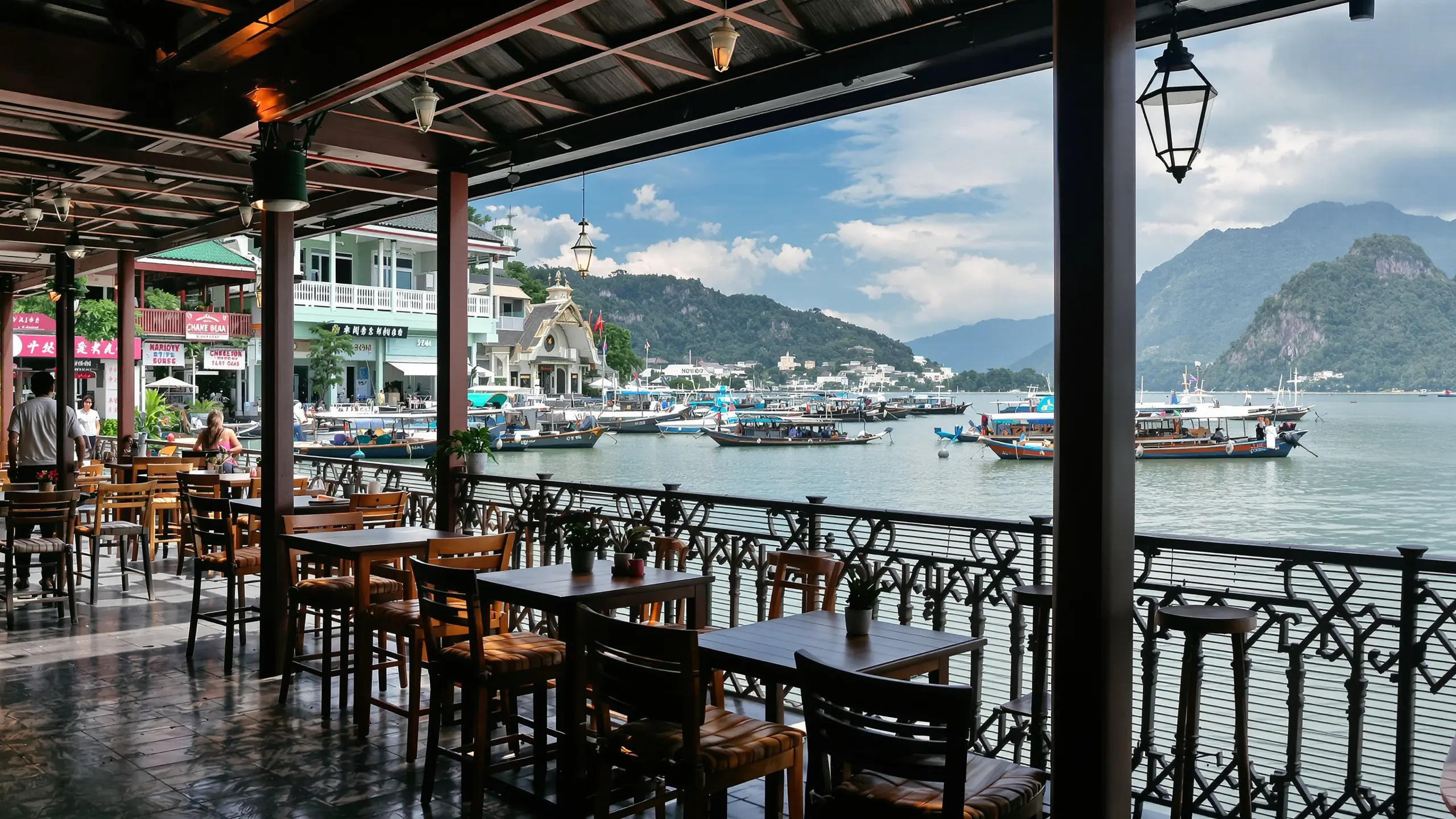
Phuket for digital nomads: your dream island life, with a surcharge
Don’t mistake Phuket for Thailand in miniature. It’s one of the most visited islands in the world, but its south and its old town hold real niches for remote workers. Ready to find your place? Discover where to live, what it costs and when to come.
Where on the island you work
Phuket is about the size of Singapore. Only know it from Patong headlines? You are missing the bigger picture. Budgeting with Chiang Mai prices? Brace yourself for a shock. Get this one rule right and give yourself a better start: the west coast beaches belong to tourism, the work happens in the south and in town.
Rawai and Chalong are the nomad hub. Want to land somewhere you can actually belong? The south of the island has been the long-stay area for years: monthly apartments instead of resorts, coworking spaces, Thai and western food side by side, and the highest density of Muay Thai and fitness camps in the country. Many remote workers build their daily rhythm around them. First time here and craving company? Start here.
Phuket Town is the underrated pick. Fall for the island capital’s Sino-Portuguese shophouses, coffee roasters and markets, and discover the only part of Phuket that works without a beach. Cheaper than the coast, alive all year and filled with real Thai daily life, it gives you something worth choosing: the best base on the island for focused work weeks.
Bang Tao and Cherngtalay on the west coast offer the upscale lifestyle: co-living and fitness resorts, international families and beach clubs, with prices to match. Patong is the weakest place to live: a relentless nightlife machine, constant traffic and tourist prices. Want something in between? Kata and Karon are packed in high season, then turn surprisingly relaxed outside it.
Do not let the map fool you: without a scooter or car you are stuck. Public transport barely exists, and getting between the south, town and the west coast takes you farther than you expect. Take the traffic risk seriously, too: Thailand's accident statistics are serious. Protect yourself. A helmet and staying sober are the minimum.
Costs: the island surcharge is real
Phuket’s island surcharge can sting: expensive by Thai standards, but still cheap by western ones. Here’s what that means for your budget. Figures from July 2026:
| Item | Price |
|---|---|
| One-bedroom, central | about THB 24,500 (about €640) |
| One-bedroom, outside the center | about THB 16,000 (about €420) |
| Meal at a simple Thai restaurant | THB 150 (about €4) |
| Fast fiber internet | about THB 580 (about €15) a month |
| Living costs without rent, one person | about €570 a month |
Realistically, you will spend €1,400-2,000 a month, including your rented scooter, the western food you crave and the odd island escape. That same lifestyle costs noticeably more than in Chiang Mai. The old dream of just over €800 a month? It only works on a strict budget: Thai food, a room instead of an apartment, off-season rent.
But that extra spend buys something that matters: peace of mind and possibility. International hospitals such as Bangkok Hospital Phuket, international schools, an airport with global connections via Bangkok and the Gulf hubs, and a choice of housing few other Southeast Asian nomad bases offer. More freedom to build a life you love.
The monsoon calendar: the off season is the best-kept secret
Phuket has two sides. November to April is the dry season and high season: gorgeous weather, but packed beaches, peak prices and heavy traffic come with it. May to October, the southwest monsoon brings the green season: short, heavy showers rather than constant rain, quieter roads, room to negotiate monthly rents, and that irresistible feeling that the island finally belongs to its residents again.
For remote workers, the green season is the smarter choice, but know these two realities: September is the wettest month, and the sea is seriously dangerous during the monsoon because of currents. Red flags on the beach are not decoration. Dreaming of swimming? Come in winter. Craving space to work, save and finally breathe a little easier? Come in summer.
The monsoon does not have to interrupt the life you came here to build. Showers usually arrive in the afternoon and pass within an hour or two, while power cuts are rare and short. Keep a mobile connection ready as a backup for important calls anyway, because peace of mind is worth protecting.
Visa and tax in brief
Your island dream deserves more than “one day”. Start by getting the essentials right. There is no island visa; Thailand's national rules apply, and since 2024 they have been reassuringly clear. The standard route is the DTV (Destination Thailand Visa): valid five years, 180 days per entry, extendable once per entry by another 180 days, fee THB 10,000 (about €260). Apply from outside Thailand through the official e-visa portal. Don't let one overlooked requirement stand between you and that dream: THB 500,000 that has sat in your account for about three months.
Longing for a shorter escape? Many passports had 60 days of visa-free entry as of August 2026. A cut to 30 days had been decided but was not yet in force in early August, so check the current rule before you book. Make your next move with confidence: explore the DTV, LTR and Thailand Privilege on our Thailand visa page, then uncover the pitfalls before they catch you out with this DTV review.
Don't let tax worries steal the freedom you're chasing. Tax follows its own logic, whatever your visa. Spend 180 days or more in Thailand in a calendar year and you are tax resident, and since 2024 foreign income is taxable when you bring it into Thailand. The DTV's 180-day windows sit exactly on that line. Your home country matters too: don't leave half the calculation to chance. Take your next step towards clarity on our digital nomad taxes page.
Internet, health and daily life
Build a life you don’t need a holiday from, without sacrificing your connection. Thailand's internet is among the best in the world, and Phuket is fully connected. The median fixed-line speed in Thailand was about 286 Mbit/s in spring 2026; fiber is standard in apartments and costs about €15 a month. Grab an eSIM or prepaid SIM from AIS or True; both cover the island reliably. Find work-friendly cafés in Old Town and the south, plus coworking spaces in Rawai, Chalong and around Bang Tao. The community is smaller and more transient than in Chiang Mai or Bangkok, but meetups and gyms make finding your people easy.
Enjoy the adventure, with peace of mind built in. Private hospitals such as Bangkok Hospital Phuket work at an international level, but their prices can hurt if you’re uninsured. Get health insurance that covers Thailand. Protect yourself from mosquitoes in the rainy season: dengue is a real issue across the country. And arrange banking that works without a Thai account, because foreigners without a residence permit rarely get one.
Imagine a south Phuket routine that gives you more of your life back: training at a Muay Thai or fitness camp in the morning, focused work before lunch, a second work block in the afternoon when Europe wakes up. At five to six hours ahead of Central Europe, half the day is yours. Then come weekends in some of Southeast Asia’s best playgrounds: the limestone cliffs of Phang Nga Bay, day boats to the Similan or Phi Phi islands, freediving and dive schools, and the hike up to the Big Buddha. Bringing the family? International schools help Phuket attract a growing number of nomads with children, a profile otherwise served in Southeast Asia almost exclusively by Bali.
Phuket for digital nomads: is it your perfect match?
Chiang Mai gives you cheaper, quieter living and the larger classic nomad community, but no sea. Bangkok delivers big-city infrastructure and flights everywhere, with a big-city pace to match. Phuket is where sea meets comfort, if your budget can stretch to the surcharge. Can’t bear to choose? Many long-term Thailand nomads rotate: the dry season on the island, the rainy season in the north. Find where Phuket belongs in your next chapter in our Asia overview.
But don’t fall for the dream without facing the density. High season brings traffic jams on the north-south road, full beaches, two-tier pricing for foreigners at many sights, and a crowd that changes every two weeks. If authentic Thailand matters most, choose the north. The payoff? Few nomad bases put sea, airport, hospitals and comfortable housing so close together. And in the green season, much of that island life is yours for less.
Frequently asked questions
Is Phuket good for digital nomads?
Yes, if you crave the sea and comfort and can pay for them. Rawai, Chalong and Phuket Town offer coworking, fast fiber and a small community. Chiang Mai is cheaper, with a larger scene, but you’ll miss out on the beach.
How much does it cost to live in Phuket as a nomad?
Your Phuket dream could be closer than you think: plan on €1,400-2,000 a month with a rented scooter, western food and some trips. A central one-bedroom cost about THB 24,500 (about €640) in July 2026. Want more breathing room in your budget? Monthly rents are negotiable in the green season from May to October.
Which visa do I need for Phuket?
Your Phuket dream deserves more than a fleeting escape. The Thai DTV is the standard: five years, 180 plus 180 days per entry, a THB 10,000 fee, applied for from outside Thailand, with THB 500,000 in funds held for about three months. A shorter escape? As of August 2026, many passports could still enter visa-free for 60 days; a cut to 30 days was decided but not yet in force.
Can I work in Phuket during the rainy season?
Yes, and it’s the better season to get work done! Enjoy emptier roads, lower rents and short showers, usually in the afternoon. More breathing room. Less financial pressure. Just remember: the sea is off limits on red-flag days because of strong currents.
Thailand in your plan
Dreaming of making Thailand part of a bigger plan?
Before you build your year around the DTV and the 180-day line, make sure Thailand fits with your departure from home, your residence and your income structure. Don’t leave the order to chance. A consultation helps you get it right.
Book a consultation