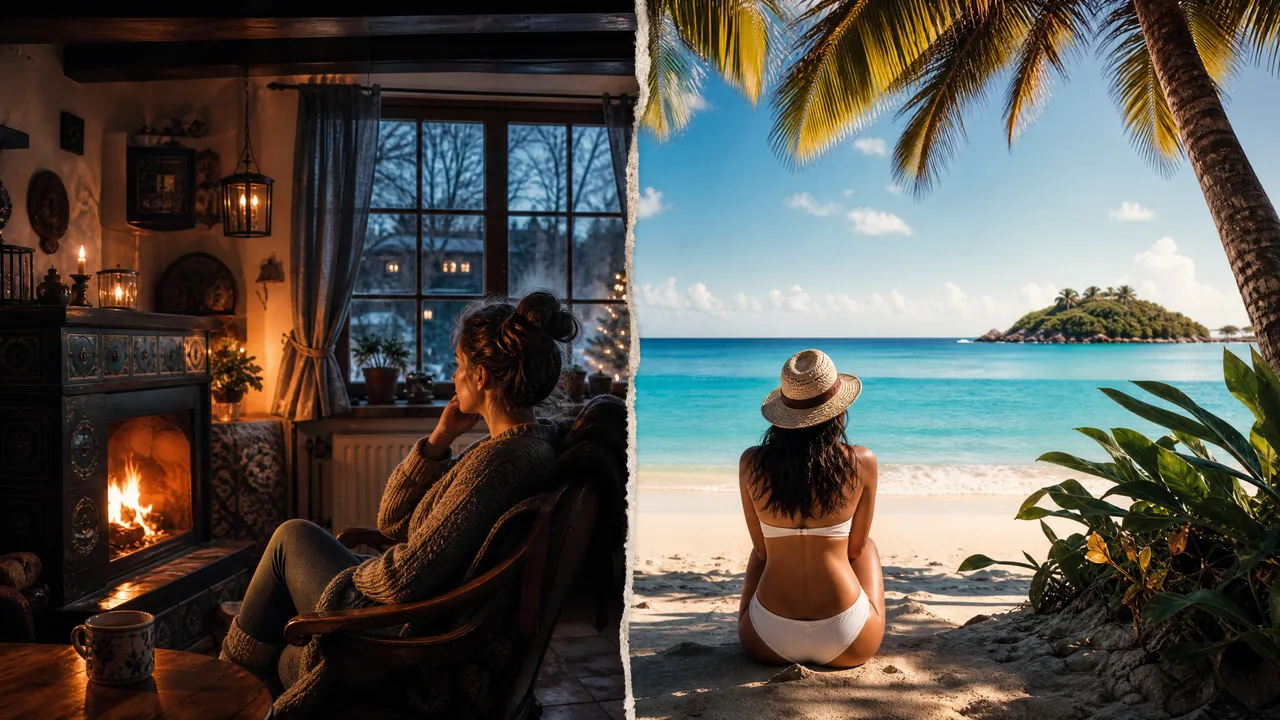
Digital nomad homesickness: when wanderlust calls, but your heart aches for home
You can work from anywhere, and still ache for home on the most beautiful beach. Homesickness is one of the quiet costs of nomad life. Discover why it hits, and how experienced nomads cope when paradise feels lonely.
Digital nomad homesickness: when adventure calls, but home tugs at your heart
You can work from anywhere, and still ache for home in the most beautiful places. Often, it’s the little things you miss most: familiar food, family and friends, or the everyday routines you never realised meant so much.
For many nomads, life holds two powerful pulls. Wanderlust draws you toward new places and experiences; homesickness pulls you back toward everything familiar and safe. Some days, one wins. Other days, you feel both at once. That tug at your heart doesn’t mean you chose the wrong life. You can crave adventure and miss home. Both belong in your story.
How common is it?
Far more common than those picture-perfect social feeds dare to show you. In MBO Partners' 2025 research on digital nomads, 26% named distance from family and friends as one of their biggest difficulties, 19% reported loneliness and 23% travel burnout. That is not a majority, but it is one in four or five. And most never saw it coming: those first months were full of new faces, not signs that the dream could start to hurt.
On the road, several things can make that loneliness cut even deeper:
- Constant movement. Real friendship grows through repeated moments together. Move every few weeks, and you keep leaving behind the very thing your heart needs to feel connected.
- Culture and language. Cultural differences and language barriers can make you feel desperately out of reach, especially where local languages dominate daily life.
- No built-in social life. The office, the club, your local bar, Sunday lunch with family: suddenly, the everyday connection you barely had to think about is gone.
- Pressure in other areas. Health worries, fluctuating income or visa stress can turn distance from your safety net into something that feels painfully overwhelming.
What helps: keeping home close to your heart
Regular contact. Nothing replaces being with family and friends. But video calls at fixed times give you moments to hold on to, and help more than calling only when you happen to remember.
Planned visits home. Give yourself a homecoming to look forward to. Plan one or two visits home a year as fixed dates, not options. They keep friendships alive, and many nomads bundle doctor's appointments and other errands into them.
Rituals and familiar things. Carry little pieces of home with you. A few small keepsakes, a morning routine that travels with you, or a favorite dish you cook wherever you are can help you feel grounded. Find familiar comforts in each new place, too: a market, a sport, a café that feels like yours.
And when it still feels hard, you're not failing. Adjusting to a new place again and again takes energy. Some strain remains, and that is normal.
What helps: finding your people, wherever you are
You didn’t choose life on the road to feel alone. You deserve real closeness, and it starts with places and routines that bring people into your life:
- Coliving houses, where you share life with other remote workers and step into a social circle from day one
- Coworking spaces, where meeting other nomads and locals can turn another lonely workday into one you share
- Online communities for cities and scenes, such as Slack and Discord groups, which organize meetups, sport and work sessions, because you shouldn’t have to do everything alone
- Meetups, sports clubs and hobby groups, which help you feel genuinely part of the local community, not just connected to other travelers
- Nomad hubs such as Chiang Mai, Lisbon, Medellín or Canggu, where so many like-minded people live that finding company comes down to will, not luck
Above all, stay longer. Give connection the time it needs to feel like belonging. Deeper relationships grow when people stay for months, not days, and a short stay on a tourist visa is rarely enough to truly settle into a community. Your people are out there. Ready to find them? Explore our guide to the digital nomad community.
Don’t just arrive. Finally feel you belong.
A new place becomes home when you open your heart and embrace local customs. Learn the basic etiquette, fall in love with the local food and join local events. Don’t just settle in. Start making this place yours.
Language can change how connected you feel. English is widespread in many European countries, while in much of Asia local languages dominate daily life. Even basic skills make shopping, dealing with local officials and journeys on public transport easier, and open the door to genuine human connection. Your first conversation could be the start of something beautiful. Take that first step with language courses, tandem partners and apps.
Protect yourself, and the safety net that brings you peace of mind
When life feels shaky, homesickness can hit harder. Medical care varies widely between countries, and many nomads neglect vaccinations and check-ups. Don’t leave your wellbeing to chance: proper health insurance for digital nomads is essential, even when choosing it feels complicated.
Money worries can make that longing worse: fluctuating income, unexpected costs and exchange rate swings. An emergency reserve means having the option to fly home when it truly matters. Staying longer? Protect your peace of mind by understanding the legal questions: many countries now offer digital nomad visas, usually for about twelve months with an extension option, typically requiring stable income, health insurance and a clean criminal record. Long stays can also create tax obligations.
Give yourself room to breathe. Many nomads find that yoga, meditation, sport or time outdoors helps them handle stress. Draw a deliberate line between work and free time, and listen when you need a break or more company. Facing other common crises? Find guidance in our guide to digital nomad challenges.
When homesickness is a signal
Sometimes a visit home or a slower month eases the ache. Sometimes homesickness whispers something you can no longer ignore: you want roots, a partner nearby or a shelf of your own books. Ending the nomad chapter is normal, not failure. And it needn’t mean goodbye forever: in MBO Partners' 2025 research, 83% of former nomads said they might or would go again.
And what this life gives you stays with you: self-determination, an international network, adaptability and confidence that grow with every new place. You don’t have to choose forever between the thrill of discovery and the comfort of belonging. Build a life with room for both. Ready for the full picture? Read our reality check of the digital nomad lifestyle.
Frequently asked questions
Are digital nomads lonely?
Some are, and missing your people can hurt. In MBO Partners' 2025 research, 19% of digital nomads reported loneliness and 26% named distance from family and friends as one of their biggest difficulties. Freedom doesn’t erase the need to belong.
How do digital nomads deal with homesickness?
By keeping loved ones close through regular calls home and one or two planned visits home a year. Small rituals and keepsakes bring comfort, while coliving, coworking, local groups and longer stays in one place help life on the road feel like home.
Craving a place to belong instead of always moving?
Sometimes, homesickness isn’t calling you home, it’s asking you to slow down. Imagine a real base with a residence permit, and the freedom to travel from there. Find a place that fits your life, not the other way around. Start with a consultation.
Book a consultation