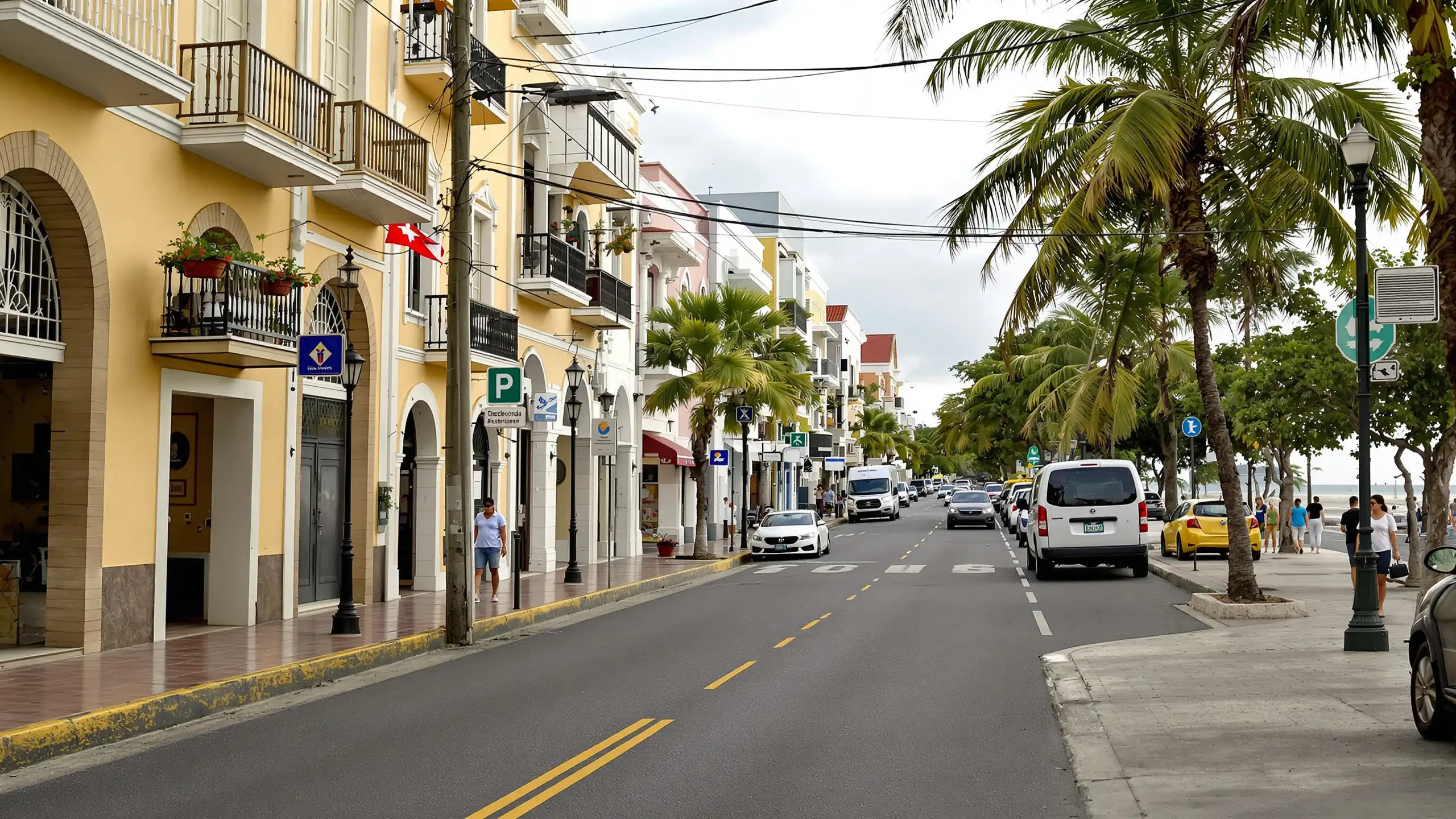
The Dominican Republic for digital nomads: make your dream work
Your Caribbean dream doesn’t have to break the bank. The Dominican Republic keeps it affordable, but most guides sell you a nomad visa that does not exist and ignore power, traffic and safety. This guide puts those realities first, as of August 2026.
Entry and stay: the dream, and the reality
The Dominican Republic is so much more than a resort backdrop. It is a real country with a capital of millions, two international hubs, mountains above 3,000 meters and coastline in every direction. For remote work, it is one of the most underrated places in the western hemisphere, and one of the most misdescribed. You deserve the full picture before you fall in love.
It has no digital nomad visa, unlike Barbados, Curaçao or Costa Rica. Announcements have come and gone over the years, but nothing is in force. Here is what you can actually plan around:
- Entry: if your passport is visa-exempt, you get 30 days to experience it for yourself. Check your own passport before you book. The old tourist card is now part of the electronic E-Ticket, which you fill in online before entry and exit.
- Extension: not ready to leave? Through the online portal of the immigration authority (DGM), you can extend your stay up to 120 days, fully online.
- The overstay practice: many long-stayers do not extend at all. They stay longer and pay a graduated fee at the airport when they leave, under the official DGM tariff from 3,500 pesos (about €55) for up to three months over. It is decades-old routine, but do not mistake familiarity for security: it is tolerance, not a right. No legal status, no bank account or contracts in your own name, and terms that can change at any time. Fine for a few winter months, never a foundation for the life you dream of.
Residence: the clean way to stay
Ready to call this home? At this price level, regular residence is more accessible than in most countries, so staying could be closer than you think:
| Program | Requirement |
|---|---|
| Rentista | About US$2,000 a month in passive income |
| Pensionado | US$1,500 a month in pension |
| Investor residence | Investment from US$200,000 |
Your path starts with a residence visa at a Dominican consulate, before your case moves to the immigration authority in Santo Domingo; in practice, almost nobody navigates it without a local lawyer. After some years of temporary and permanent residence, naturalization becomes possible. Self-employed with stable income? The rentista route means leaving tolerated long-stayer status behind, and becoming a resident with papers, bank access and the relief of a solid answer to the residence question.
Tax: territorial, with a three-year twist
Keep more of what you earn, and give your next chapter room to grow. For tax, the Dominican Republic stands out in Latin America. You become tax resident after more than 183 days a year. Its territorial system means Dominican-source income is taxed at progressive rates up to 25%, while foreign employment and business income stays tax-free, however long you stay.
But there is one twist you cannot afford to overlook. Foreign interest, dividends and similar income are tax-free only in the first three years of residence and become taxable from year four. Living off a portfolio? Plan for that change. Living off active work? This twist does not affect you. Pensionado and rentista residents get additional exemptions.
Protect your fresh start by checking what is missing, too: the country's list of tax treaties is short, mainly Canada and Spain. Make sure your home country accepts your move; in a conflict, there is often no treaty tie-breaker to protect you. If you are a US citizen, you remain subject to US income tax on your worldwide income wherever you live (IRS). Build your plans on real residence, not wishful thinking: discover why it is the core of any nomad tax plan on our taxes page.
Internet, power and time zone
Forget the internet horror stories: the median fixed-line speed is about 50 Mbps download, and in cities and established expat towns, fiber from Claro or Altice gives you much more, for about €30-60 a month. That’s room to breathe, and get things done. Mobile coverage is decent along the populated corridors, but head into the mountains or small coastal villages and it thins out fast.
The real make-or-break? Power. Power cuts, the "apagones", are part of daily life across the country, lasting from minutes to hours, depending on the region. Don’t let beautiful listing photos distract you: better buildings have generators or inverter systems with battery backup, and that’s your first question. Ask about the "planta", the backup power, before you look at any listing photos. With an inverter and an LTE backup on your phone, you can work reliably, and breathe easier.
Now picture the freedom: the country runs on UTC-4 with no daylight saving time. For clients in Europe, that’s six hours behind Central European summer time and five in winter: your morning is their afternoon, and your afternoon is yours. Work asynchronously? None of this matters. Your time stays yours.
The Dominican Republic for digital nomads: find the base that steals your heart
- Santo Domingo is the underrated gem you’ll wish you’d found sooner: the heartbeat of a real city, the oldest colonial quarter in the Americas, modern infrastructure in Piantini and Naco, coworking, international clinics and the most stable internet in the country.
- Las Terrenas on the Samaná peninsula is beach life you’ll never want to leave: a long-established European community with a strong French presence, good restaurants, fiber in central areas and humpback whales in Samaná Bay from January to March. The priciest beach town, but the best quality of life.
- Cabarete on the north coast makes you feel alive: one of the best-known kite and windsurf coasts in the world, surfing at Playa Encuentro and a young international scene. Sosúa and Puerto Plata are second choices as a base.
- Punta Cana brings that resort-life feeling and the main airport within reach: handy for the first two weeks, but an enclave as a long-term base.
- Jarabacoa in the mountains gives you room to exhale into cooler, green country life, with more care needed on internet and power.
Costs, climate and health
Imagine finally living comfortably in Santo Domingo on €1,100-1,800 a month, or in Las Terrenas or Cabarete on €1,200-2,000, with a decent apartment, meals out and a scooter or occasional rental car all covered. Furnished one-bedroom apartments in the expat towns start around US$500-700. Feel your money go further at cheap local markets; imported food and expat restaurants cost European prices. You pay in pesos, and the US dollar is everywhere. A local bank account usually needs residence; until then, keep using your existing accounts and cards. Take that first confident step with banking for digital nomads.
Feel that warmth on your skin: 25-32°C all year, with a rainy season of roughly May to November depending on the coast. Hurricane season runs from June to November; direct hits are rare, but plan insurance and backups. October to April is the best time to come. Give yourself precious peace of mind: private clinics in Santo Domingo and Punta Cana are good but want prepayment or proof of insurance. Serious cases away from the centers are moved to the capital, making international health insurance a must.
Community, language and safety
Want more than fleeting connections? The nomad scene is smaller and older than in Chiang Mai or Canggu, but more stable: in Las Terrenas or Cabarete, you meet people who have stayed for five, ten or twenty years. Find coworking in Santo Domingo, Las Terrenas and Cabarete; in Cabarete, kitesurfing brings people together. Outside the resorts and expat cores, the country runs on Spanish. English gets you through the first week. Spanish opens up the first year.
Protect the life you came here to enjoy. Germany's Foreign Office rates the crime rate as relatively high; check your own government's advice before you go. Robberies happen in tourist areas too, often by thieves on motorcycles targeting phones, bags and jewelry. Never walk unlit streets alone at night, keep valuables out of sight and never resist a robbery. The biggest statistical risk is road traffic: do not drive overland at night, always wear a helmet on a scooter, and hire a driver when in doubt.
Frequently asked questions
Does the Dominican Republic have a digital nomad visa?
Dreaming of making the move? No, not as of August 2026. There have been announcements, but no program is in force. Still, you have options: the extension to 120 days for seasonal stays and the rentista residence for people ready to stay.
Do I pay Dominican tax after 183 days?
More than 183 days makes you tax resident, but here’s the relief: under the territorial system, your foreign work income stays untaxed. And your foreign investment income? It becomes taxable only from the fourth year of residence.
Is the internet good enough for video calls?
In the cities and expat towns, yes, with fiber, so you can stay connected when it matters. Power cuts and remote locations are the risks. Choose accommodation with backup power and an LTE backup, and it is manageable.
From Caribbean winter to residence
Love your Caribbean winter? A season on a 120-day extension is simple. But Rentista residence, territorial tax and a clean exit from your home country need a plan. Take the next step with confidence: a consultation helps you put them in order.
Book a consultation