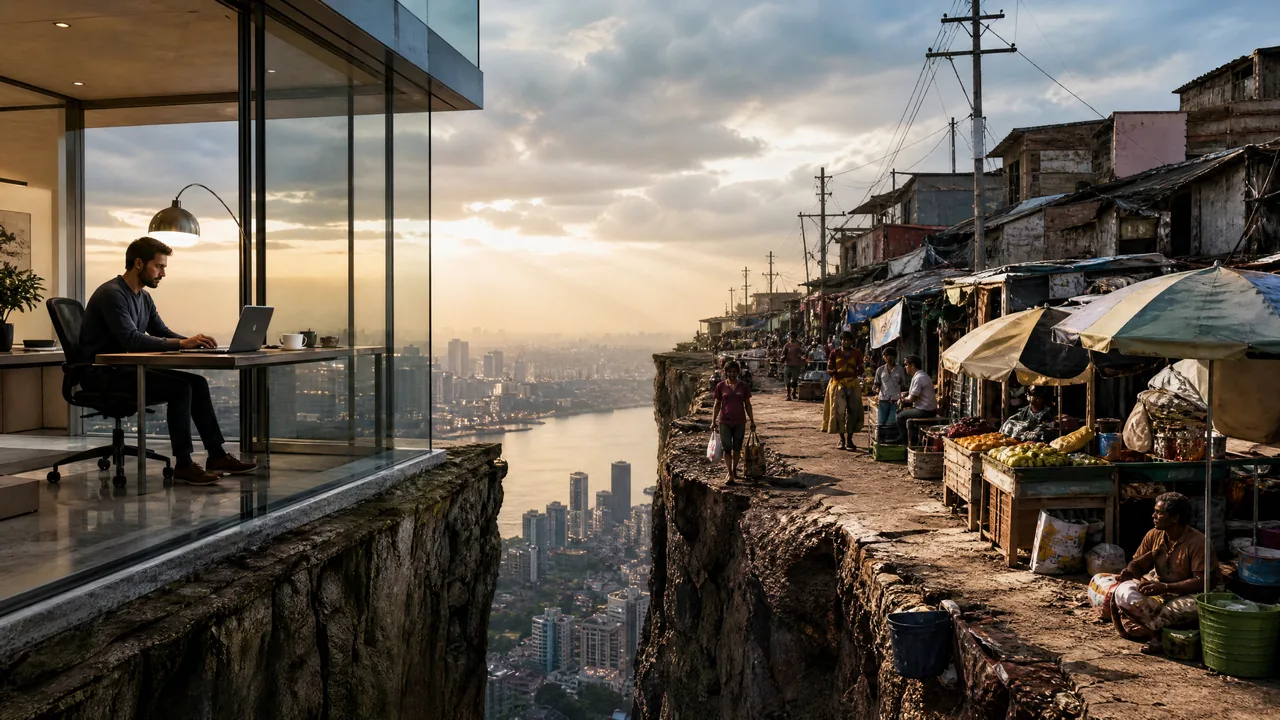
Digital nomad gentrification: the price the places we love pay for remote work
Working from anywhere sounds like freedom. But when thousands of well-paid remote workers flock to the same neighborhoods, rents, cafés and everyday life change, and the impact hits home. Discover the critique, hear the counterarguments and find out what you can do to make a difference.
The critique: neocolonialism through remote work?
A laptop. The world at your feet. The freedom to work on your own terms. Digital nomads combine work and travel: location-independent, flexible about when and where they work, often minimalist and self-directed. The idea emerged in the early 2000s as the internet spread, fuelled by globalization, better communication technology, growing acceptance of remote work and a powerful desire for a different way of life.
But behind that dream lie uncomfortable questions. Critics argue that nomads from the Global North who work in the Global South perpetuate neocolonial structures: enjoying low living costs and exotic surroundings without supporting local economies in a lasting way. At the heart of this critique is an imbalance of power between travelers and local communities. Nomads benefit from cheap living and flexible visa rules in developing countries, potentially creating one-sided economic dependence, often without building deeper ties to the cultures they visit. For critics, the troubling question is clear: whose freedom comes at whose expense?
How digital nomad gentrification works
For locals, the pressure lands where it hurts most: home. In popular destinations, rents often rise sharply, and locals can be pushed out. Short-term rentals through platforms such as Airbnb mean fewer long-term homes for the people who live there, fuelling displacement and social tension. The COVID-19 pandemic intensified that strain as remote work suddenly became normal for many more people.
The local economy shifts, too, and residents can be left behind. Coworking spaces and digital infrastructure emerge, often disconnected from the traditional labor market. When tourist infrastructure comes first, the everyday needs of residents can slip painfully out of focus.
Now, that frustration is pouring onto the streets. On Mallorca, at least 25,000 people, by the Diario de Mallorca’s count, marched in Palma in July 2026 against overtourism and the housing shortage; the organizers said 70,000. It was the third year in a row. Remote workers are not the main target, but if you rent there, you are part of that equation. Before you make your move, understand where you fit in with our Mallorca digital nomad guide.
Some cities are fighting back with regulation, including limits on short-term rentals and quotas for affordable housing.
The other side: what nomads bring
There’s another side to this story, and it matters. Digital nomads often earn more than the average tourist and stay longer, giving them real power to support local economies:
- Demand for long-term rentals, not just nightly holiday lets.
- Steady business flowing into cafés, restaurants and coworking spaces.
- Knowledge transfer and networks that live on beyond the visit.
Governments recognise that potential. Many countries now offer visa programs for digital nomads, welcoming remote workers and their spending. In Europe, Estonia, Croatia and Portugal were among the pioneers, and Barbados was another early mover. Requirements usually include a minimum income and health insurance, with permits typically lasting from six months to two years. For non-EU citizens such as Americans or Canadians, these visas opened an exciting, legal path to living in Europe while working remotely. Explore the possibilities in our digital nomad visa overview.
The promise? Long-term economic benefits. The risk? Social tension if housing and services cannot keep pace. There’s genuine potential here, but the long-term effects are not yet fully clear.
Culture, language and the bubble
Digital nomads don’t just discover destinations, they change them. New business models and lifestyles meet local traditions, opening the door to fresh possibilities. An international community can bring a place to life in new ways. But there’s something precious at stake: the local identity that made it special in the first place.
You can cross the world and still feel worlds apart. Cultural exchange happens, but often barely scratches the surface. Short stays leave little time for deep relationships. Many locals see nomads as temporary visitors and respond with skepticism, leaving both sides feeling isolated. Language is a major barrier: many nomads do not speak the local language, turning everyday interactions into challenges and keeping culture behind a translation app. Some cities are working to bridge that divide through events and coworking programs that bring nomads and residents together.
The pull of popular hubs is powerful. Bali, especially Ubud, attracts large numbers with its climate, low costs and community. Barcelona, Berlin, Buenos Aires, Austin and Medellín are established hotspots, while Lisbon, Chiang Mai, Da Nang and Cape Town have grown fast. Since the pandemic, nomads increasingly want more than a fleeting escape: longer stays in one place, good healthcare and stable internet.
The climate question
The freedom to travel comes at a cost to the planet. Frequent travel raises your carbon footprint, with flights making up the biggest share. Fly several times a year, and your emissions can quickly climb many times higher than those of people who stay put.
But your choices can make a difference. Many nomads own and consume less, shrinking their footprint elsewhere. Some swap planes for trains on long journeys, explore cities on e-bikes and scooters, and choose eco-minded coliving houses. The most effective step is the simplest: travel slower. With fast, stable internet, staying for months, not moving every few weeks, becomes easier. More time to settle in. More freedom to feel at home.
How to be a fairer guest
You do not have to give up the freedom to travel. But the places you fall in love with are someone else’s home. Understand what is at stake, and make choices that do not accidentally add to local housing pressures:
- Rent long-term, not short-term. Choose a monthly or yearly lease and join the regular market instead of competing with holiday lets. You are less likely to occupy a flat taken off the long-term market.
- Travel in the off season. Summer puts many destinations under the greatest pressure. Choose a winter stay and help spread demand.
- Spend locally. Make every purchase count at local shops, markets and services. Step beyond the expat bubble and support the community around you.
- Learn the language, at least the basics. Those first words matter. They change how you are treated, and what you understand.
- Stay longer and come back. Go beyond passing through. Turn repeated stays into real ties with locals and other nomads. Find your connections in our guide to the digital nomad community.
- Pay your taxes where they are due. Being resident nowhere carries legal risks, and means contributing nowhere. Do not leave this to chance. Understand how residence works in our guide to where digital nomads pay taxes.
Frequently asked questions
Are digital nomads bad for local communities?
Not by definition. But the impact is personal: rising rents can push locals out of popular neighborhoods, especially through short-term rentals. Digital nomads also bring longer stays, higher spending than average tourists and demand for long-term housing. Your choices matter. How you rent and spend can make the difference.
Do digital nomads raise rents?
In popular destinations, demand from remote workers and short-term rentals can drive rents up, and leave locals with fewer places to call home long term. Some cities are pushing back with limits on short-term rentals and affordable housing quotas.
How can I be a more responsible digital nomad?
Make your freedom a force for good. Rent long-term rather than through short-term platforms, travel in the off season, spend locally, learn some of the language and stay longer. Put down real roots, and make sure you are tax resident and paying tax somewhere.
Stay longer. Feel like you belong.
Stop passing through. Start feeling at home. Slower travel is fairer and often smarter. A consultation helps you choose a base, a residence and a tax setup, so you can truly settle in, not just stop over.
Book a consultation