The digital nomad backpack: how to find your perfect match
Your backpack carries more than your office, your documents and most of what you own: it carries your world. Discover what makes one worth trusting, which size works on planes and how popular models stack up.
What a digital nomad backpack has to do
Your backpack carries your freedom, and the devices your livelihood depends on. For location-independent work, it has three jobs: protect your devices, get through airports without fees and keep you comfortable on that hour-long walk between a bus stop and your next apartment. Robust, light and comfortable. You need all three.
Still deciding what deserves a place inside? Start with our digital nomad packing list and the overview of digital nomad gear. Choose a bag that fits your kit, not one that forces you to compromise.
Size and weight: why 30-40 liters works
30-40 liters is your sweet spot for freedom. Your laptop, a camera and clothes for a week or more, all packed and ready. Enjoy the ease of cabin baggage on most flights, and let the adventure begin.
- Carry-on size. Leave last-minute panic behind: many airlines work with a cabin limit of around 55 x 40 x 20 cm. Check your airline before you fly, because budget carriers are often stricter.
- Compression. Tight rules? Take back control. Compression straps and compressible sides let you shrink the bag when every bit of space feels precious.
- Empty weight. Carry what matters, not unnecessary weight. The empty bag adds to your total load, so light fabrics such as ripstop nylon help.
Material, comfort and weather protection
Your plans deserve better than a torn bag. Choose tear-resistant, water-repellent fabric and head out with confidence. Polyester and nylon keep things light and durable; Cordura is a common choice for tougher bags. Quality zippers and reinforced seams determine how long your bag lasts, while many makers offer warranties against damage from transport and use, giving you extra peace of mind.
Feel the relief with every step: padded, adjustable shoulder straps, a hip belt for heavier loads and a ventilated back panel that limits sweating. A reinforced base or an internal frame gives your bag structure and helps protect the things you care about inside.
Changing weather shouldn’t leave you worrying about your belongings. Water-repellent fabric handles light rain; for more protection, look for sealed seams, waterproof zippers and a rain cover stowed in its own pocket. Some models use coated or waterproofed fabrics for lasting protection, especially important when you’re carrying electronics you depend on.
Organization and electronics
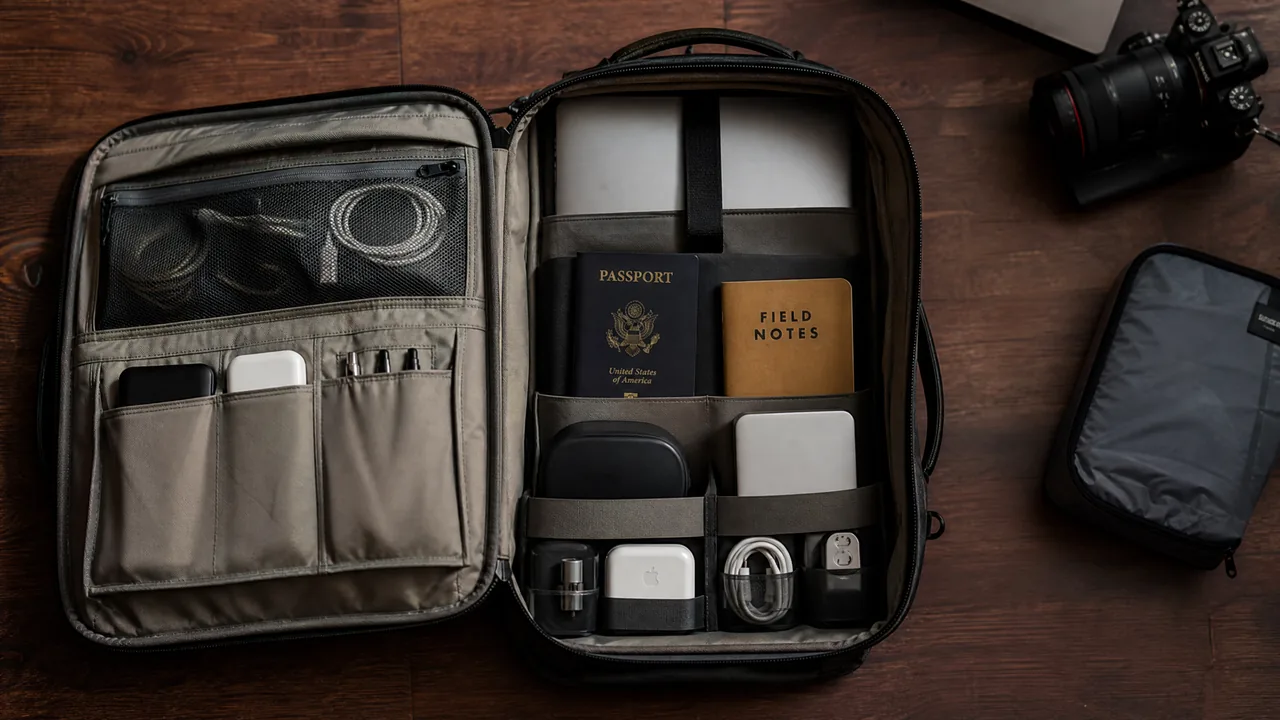
Your digital life deserves a safe home: the padded laptop compartment, usually for devices up to 15 or 17 inches, often with an extra sleeve for a tablet or e-reader. Some bags have a separate laptop section that opens flat, helping you breeze through airport security faster.
Small details. Huge relief:
- cable organizers and pockets to keep power banks within reach
- waterproof compartments for laptops and external drives
- a roomy main compartment plus quick-access front pockets
- a separate section to keep shoes or laundry apart
- side pockets for your water bottle or umbrella
- mesh pockets inside the lid to keep small items handy
Some models add built-in USB charging ports, small solar panels or integrated trackers. Enjoy the extras, but don’t let them be your reason to buy.
Security features that bring peace of mind
Don’t let theft steal your peace of mind. It’s the risk you can reduce most with the right bag. Look for:
- hidden zippers and secret pockets, including back-panel pockets to keep documents and emergency cash tucked away
- lockable zippers and, on some models, an integrated cable lock to secure your bag to a fixed object
- RFID-shielded sleeves for your cards and passports
- cut-resistant fabric on anti-theft models
- reflective elements to help you stay visible after dark
Enjoy city days with less worry: a compact daypack with anti-theft features is often the better choice. Some travel backpacks include a detachable daypack for exactly this. Your bag protects your hardware, but don’t leave your data exposed. Use a VPN, strong passwords and regular backups on encrypted drives. Take the next step towards peace of mind with our guides to safety tips and cybersecurity for digital nomads.
Popular backpack models compared: find the one you’ll love
| Model | Volume | Strengths | Trade-offs |
|---|---|---|---|
| Osprey Farpoint 40 | 40 liters | Carry-on size for most airlines, comfortable harness, front opening, laptop sleeve up to 15 inches | Limited number of compartments |
| Pacsafe Venturesafe EXP45 | 45 liters | Anti-theft design: cut-resistant fabric, lockable zippers, RFID pocket, padded laptop compartment | |
| GORUCK | varies | Extremely robust, built for rough conditions | Can be heavy and expensive |
| Nomatic Travel Bag 40L | 40 liters | Many organization options, suits tech-heavy travelers | Can feel too complex |
| Tortuga Travel Backpack Pro | varies | Comfortable to carry, good for minimalists | Less protection for fragile devices |
| Peak Design Travel Backpack | varies | Modular design that adapts to different trips |
Don’t settle for someone else’s perfect bag. No model is best for everyone, so choose what matters most to you: carry-on fit, theft protection, organization or weight. Fly often with budget airlines? A 40-liter bag with compressible sides gives you the most room to adjust. Spend long days in crowded cities? Prioritize anti-theft features over an extra pocket, because peace of mind matters.
Price and value
Your next adventure deserves a backpack you can trust. Budget models start at about €100; quality brand backpacks cost €300 or more. A dedicated laptop compartment, theft protection or charging ports raise the price, but add welcome value when you’re on the road.
Buy quality, and feel the difference for years. Robust fabric and solid construction stand up to daily use, usually costing less than replacing a cheap bag every season. Make room for the right backpack without losing sight of your bigger plans: explore our guide to the digital nomad budget.
Sustainable choices
Carry what matters, and choose with your conscience. Many brands now use recycled materials, including fabric made from PET bottles, and water-repellent coatings without harmful chemicals. Certifications such as bluesign or the Fair Wear Foundation point to cleaner, fairer production you can feel good about.
The biggest sustainability factor? Durability. A bag that stays by your side longer needs replacing less often. Some brands also offer repair services and take back old products for recycling, helping extend the bag’s life further and making your choice feel even more worthwhile.
Frequently asked questions
What size backpack does a digital nomad need?
Your next adventure starts with 30-40 liters, the sweet spot for most people. Pack a laptop, a camera and clothes for a week or more, and still fit it all as carry-on on most flights. Freedom, without leaving your essentials behind.
Is a 40 liter backpack carry-on size?
Often, yes, and that’s one less travel worry! Many airlines allow cabin bags of around 55 x 40 x 20 cm, and bags such as the Osprey Farpoint 40 are designed for this. Budget airlines can be stricter, so check your carrier's limit before you fly, and pack with confidence.
How much does a good digital nomad backpack cost?
Budget models start at about €100; quality brand backpacks cost €300 or more. Invest in robust materials and solid construction for peace of mind, and savings that usually add up over time.
Your bag is packed. Is your future ready?
The right backpack makes travel easier. But visas, residence and taxes can make or break the life you’re dreaming of for years. A consultation helps you plan the move, not just pack for it.
Book a consultation