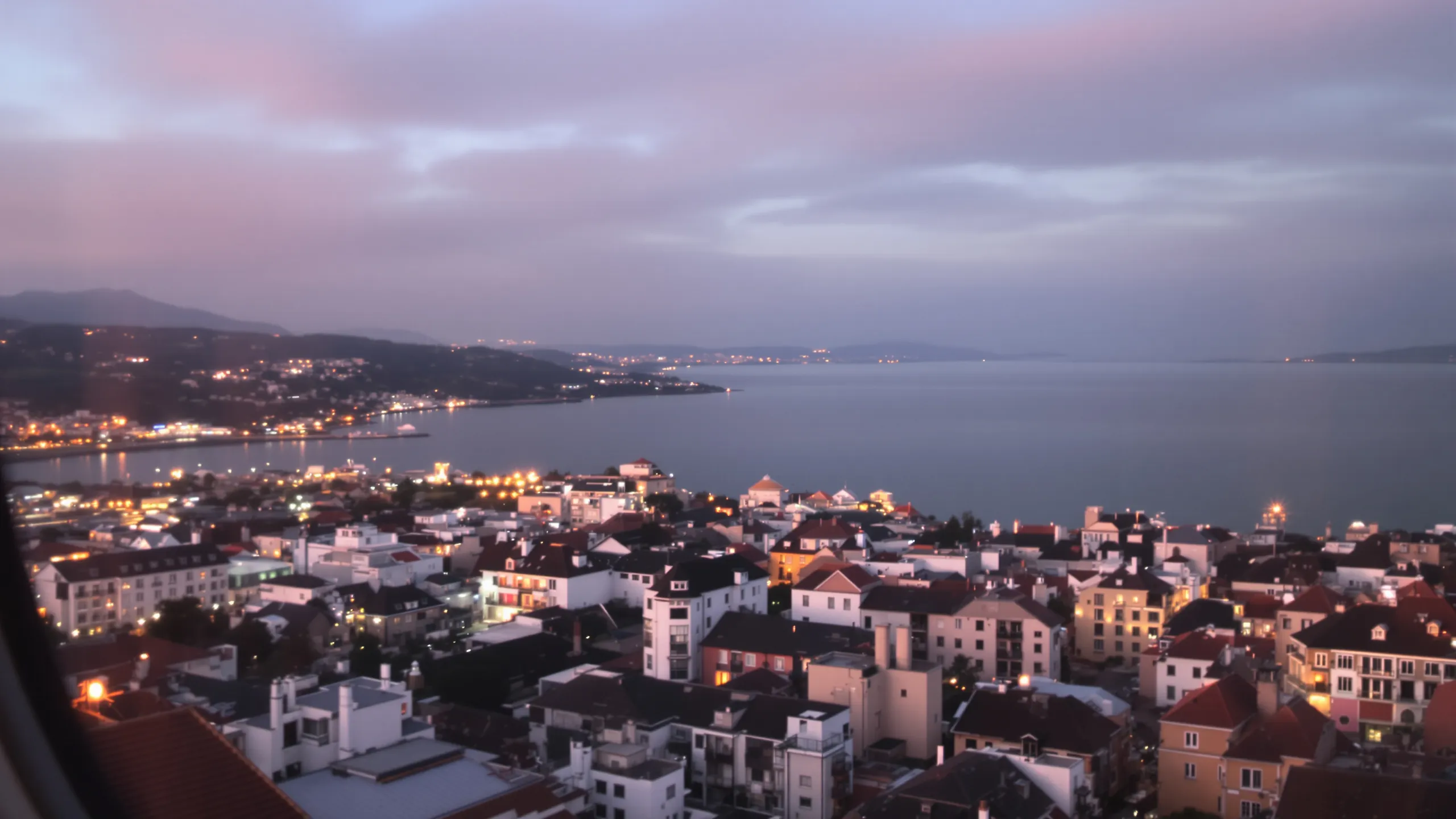
Best cities for digital nomads: 10 dream cities to call home in 2026
Don’t stake your next chapter on pretty photos and Wi-Fi promises. Discover what a month really costs, how to stay legally, and the catches you can’t afford to miss, in ten cities that work for remote workers in 2026.
How this list works
Find a city where you can truly feel at home, not just a country on a map. For visas and tax systems in detail, explore our country profiles. Five essentials shape this list: internet you can count on, a community so you’re not starting alone, a budget that works in real life, a clear path to staying legally on your passport, and a time zone that keeps you connected to your clients.
What has changed since the old lists
The gray zone is closing in. In 2019 the scene ran on tourist status almost everywhere. In 2026 Thailand, Malaysia, Colombia and South Africa have real permits for remote workers, and police the informal routes more strictly. Don’t get caught relying on yesterday’s rules.
The classics are no longer bargains. Dreaming of Lisbon, Mexico City or Canggu on a shoestring? Their core neighborhoods have moved toward western European prices. The cheap window has moved on, to Tbilisi, Da Nang and Kuala Lumpur. Your budget deserves a better destination.
Tax matters more than ever. Don’t let an old list leave you unprepared. Several countries have tightened how they treat the foreign income of long-stay guests, with Thailand the best-known example.
Europe: Lisbon, Las Palmas, Berlin and Tbilisi
Lisbon
That feeling of finally finding your people? It's waiting in what has been Europe's nomad capital for the past decade, but prices keep climbing. Budget €1,100-1,600 for a central one-bedroom and €2,000-2,800 for the month. Fall for Europe's largest international community and a city you can discover on foot. EU citizens can simply move there; for everyone else, Portugal's D8 visa asks for €3,680 a month in 2026, four times the minimum wage. Chase the connection, but face the reality: an overstretched housing market and a real displacement debate.
Las Palmas de Gran Canaria
Leave winter gloom behind. Make Europe's winter base your escape. From November to March it is the only place in the EU with a reliable 20 °C and a real nomad scene, on UTC+0, one hour behind Central Europe. Find that sense of belonging on the streets behind Playa de las Canteras, for less than Lisbon at €1,700-2,400 a month. Non-EU nationals need a permit such as Spain's nomad visa. Want a good apartment? Book months ahead; the city fills up in winter.
Berlin
Feel the pull of international energy, without leaving the Central European time zone. The only German city on the list offers something magnetic: nowhere else do an international crowd and the Central European time zone come together like this. But that excitement comes with a challenge: housing is the toughest entry barrier here, and costs are the highest at €2,200-3,200 a month.
Tbilisi
Imagine less paperwork, and more freedom to breathe. The least bureaucratic base on the list: many passports can stay a full year visa-free, with no application and no income proof, at €1,000-1,600 a month. Give that fresh start a solid plan: after 183 days in the country you become a Georgian tax resident, which its low rates make workable with some structuring. Georgia also changed its rules for foreigners who work there in 2026, so read our Georgia profile first. Go for the possibilities, with eyes open to geopolitics, recent domestic tension and a gray winter.
Asia: Bangkok, Chiang Mai, Da Nang and Kuala Lumpur
Southeast Asia is five to eight hours ahead of Central Europe, so your mornings finally belong to you, with European client overlap in your afternoon and evening. Where could you feel truly at home? Explore our Asia overview, comparing five countries.
Bangkok and Chiang Mai
Thailand is still the benchmark, and since 2024, the DTV gives remote workers a real permit: valid five years, 180 days per entry, proof of funds of about €13,000. Find the belonging you’ve been craving in Chiang Mai, at €900-1,400 a month, the densest nomad ecosystem in the world; or feel your ambition ignite in Bangkok, at €1,400-2,200, the only true world city in Southeast Asia in that price range. Just don’t let the dream blindside you: after 180 days a year you are tax resident, and foreign income you bring into Thailand has been taxable since 2024. Protect your next chapter: read this Thailand DTV review first.
Da Nang
That coastal life you keep dreaming about? Here’s the best value on the list: coast, fiber and outstanding food for €800-1,200 a month. But before you fall in love, face the catch: Vietnam has no nomad visa, and the common practice is a chain of 90-day e-visas with border runs. It is tolerated, but the e-visa formally allows no work, and that tolerance can end at any time.
Kuala Lumpur
Imagine everyday life feeling this effortless: English as a language of government and business, modern apartments with a pool for €500-700, and €1,000-1,600 for the month. This underrated winner’s DE Rantau Nomad Pass asks, from 1 December 2026, for annual income above US$36,000 in tech jobs or US$60,000 in all others, for up to four years. Before you give it your heart, understand the tax catch: foreign income brought into Malaysia is exempt only if it was taxed where it was earned.
The Americas: Mexico City and Medellín
Mexico City
Imagine making Roma and Condesa your everyday workspace, among the most pleasant neighborhoods to work from anywhere. A month costs €1,500-2,300. The time zone suits US clients but is tough for European ones. Many passports can enter visa-free for up to 180 days, but the border officer decides the number, and shorter stamps have become more common. Before you fall in love, weigh the catches: 2,240 meters of altitude, air quality, and security that varies by neighborhood.
Medellín
Find your people in South America's established nomad base: €1,200-1,900 a month, with a large international community in El Poblado and Laureles. Want more than a fleeting escape? Colombia has a real nomad visa: up to two years, with income of three Colombian minimum wages, about US$1,100-1,400 a month in 2026; explore the Colombia digital nomad visa service. But don't let the dream hide the risks: security is better than its 1990s reputation but worse than Instagram suggests. Scams aimed at foreigners, including through dating apps, are real, and past 183 days you are in the Colombian tax net.
Africa: Cape Town
Why settle for an ordinary office when you could work somewhere spectacular? Now formally open, South Africa's nomad visa runs up to 12 months with an option to renew and asks for income of about R650,000 a year. Many passports can enter visa-free for stays up to 90 days. The real freedom? UTC+2, zero to one hour from Central Europe, full overlap with European clients, plus summer weather during the European winter. A month costs €1,400-2,200. Go in with eyes open: security demands real daily discipline, neighborhoods differ drastically, and while the power grid has stabilized, cafés and coworking spaces still run backups.
Your dream life starts here: the best cities for digital nomads
| City | Way to stay (2026) | Budget a month | Time zone | The catch |
|---|---|---|---|---|
| Lisbon | EU free movement; D8 visa at €3,680 a month | €2,000-2,800 | UTC+0 | Prices, housing |
| Las Palmas | EU free movement; Spain's nomad visa | €1,700-2,400 | UTC+0 | Booked out in winter |
| Berlin | EU free movement; German residence permit | €2,200-3,200 | UTC+1 | Housing, winter |
| Tbilisi | Up to 365 days visa-free for many passports | €1,000-1,600 | UTC+4 | Tax resident from 183 days, politics |
| Bangkok / Chiang Mai | DTV, 5 years | €900-2,200 | UTC+7 | Tax on remitted income from 180 days |
| Da Nang | Chain of e-visas, gray zone | €800-1,200 | UTC+7 | No durable permit |
| Kuala Lumpur | DE Rantau from US$36,000 a year (from 1 Dec 2026) | €1,000-1,600 | UTC+8 | Tax exemption only conditional |
| Mexico City | Visa-free up to 180 days, officer's discretion | €1,500-2,300 | UTC-6 | Far from European hours, altitude |
| Medellín | Nomad visa up to 2 years | €1,200-1,900 | UTC-5 | Security, 183-day trap |
| Cape Town | Nomad visa, about R650,000 a year | €1,400-2,200 | UTC+2 | Security, power grid |
Your city is not your tax home
Where you build your life and where you are tax resident are two different decisions. Don’t mistake leaving for a clean break: your home country's claim ends through a clean departure, not through absence. And being resident nowhere does not make you tax free, it leaves you exposed everywhere, without treaty protection. Becoming resident in a low-tax country is lawful; never arriving anywhere is the mistake. If you are a US citizen, you remain subject to US income tax on your worldwide income wherever you live. Take control: understand residence with our guide on where digital nomads pay taxes.
Stop dreaming. Make your move.
Three questions stand between you and your next chapter:
- Where are your clients? Stay connected: European clients fit Lisbon, Las Palmas, Berlin, Tbilisi and Cape Town easily, Asia only with an evening window. US clients fit Mexico City and Medellín best.
- One unforgettable season, or somewhere to stay longer? A season works on visa-free stays and e-visas; anything longer needs a real permit or free movement.
- What can your budget unlock? Under €1,500 a month leaves Tbilisi, Da Nang, Chiang Mai and Kuala Lumpur. From €2,500 the whole list is open.
Before you fly, protect the life you’re building: sort out health insurance covering long stays and medical evacuation, and a bank setup that survives a blocked account.
Frequently asked questions
Which is the best city for digital nomads?
Your dream city needs to work for your clients, your budget and your passport. Lisbon and Las Palmas suit European clients and EU citizens, Chiang Mai and Kuala Lumpur suit tight budgets, and Mexico City and Medellín suit US time zones. Find your fit, and build a life you love.
Which cities are cheapest for digital nomads in 2026?
Make your budget go further: Da Nang (€800-1,200 a month), Chiang Mai (€900-1,400), Tbilisi and Kuala Lumpur (both €1,000-1,600). Your next chapter could cost less than you think. But Da Nang has no durable permit, so plan it as a season, not a base.
Can I live in these cities on a tourist stay?
Dreaming of making one of these cities your home for a season? Often, yes, within your passport's visa-free stay or an e-visa. A tourist stay usually does not formally allow work, but there’s another way: Thailand, Malaysia, Colombia and South Africa now offer real permits for remote workers instead.
From city to base
Ready to make a city your home?
This isn’t just about choosing a city. It’s about leaving home, building a new life, securing a new residence and structuring your income. When so much is at stake, a consultation helps you take those steps in the right order.
Book a consultation