🇿🇦 Digital Nomads in South Africa: Live Your Dream, Cape Town Summers on UTC+2
Imagine escaping to South Africa for summer from November to March. Fall for Cape Town and the Winelands, savour excellent food and wine at low prices, and enjoy a time zone that matches Central Europe. The trade-off? A safety situation you have to manage every day.
At a glance
| Monthly costs | Cape Town €1,500-2,400 including a car; Stellenbosch or surroundings €1,200-1,900 |
|---|---|
| Internet | Fiber 100-500 Mbps for ZAR 700-1,400 a month |
| Time zone | UTC+2 all year, no daylight saving time |
| Best season | November-March (Cape Town summer) |
| Remote work visa | ZAR 650,796 a year; first term usually 12 months, up to 3 years in total |
| Where to apply | In person at a South African mission or visa center in your country of residence |
| Tax | Residents taxed on worldwide income up to 45%; non-residents only on South African income |
Why South Africa
Imagine leaving another grey winter behind, and waking up to summer without throwing your working day into chaos if your clients are in Europe. That’s the South Africa promise. Take an overnight flight and wake up to 28 °C in Cape Town, with no jet lag. Spend winter in Thailand and you’re five to six hours ahead of Central Europe; choose Mexico and you’re seven to eight hours behind. South Africa, on UTC+2, costs you zero to one hour. Feel the sunshine. Keep your working rhythm. Get your winter back.
Then discover scenery that takes your breath away, food and wine of European standard for about a third of the price, and infrastructure far better than its reputation suggests.
And safety? You deserve honesty: it’s a real, daily concern, never something to gloss over. It gets its own section below.
Everyday life
Imagine a familiar European rhythm, with more room to breathe. People get up early and make the most of every chance to be outdoors. Daily life feels more relaxed.
A car is part of that freedom, and a necessity. Public transport barely exists in a form newcomers can use, so budget for a rental car or Uber from day one. The good news? Uber works very well in Cape Town and Johannesburg.
Affordable cleaning, repairs and delivery can take real weight off your shoulders. But extreme inequality is visible across the city. This matters: if you cannot live with that reality, you will not be happy here.
English is the everyday language, what a relief compared with Asia or Latin America. You will also hear Afrikaans commonly spoken in the Western Cape.
Where to live: find the place you’ll fall for
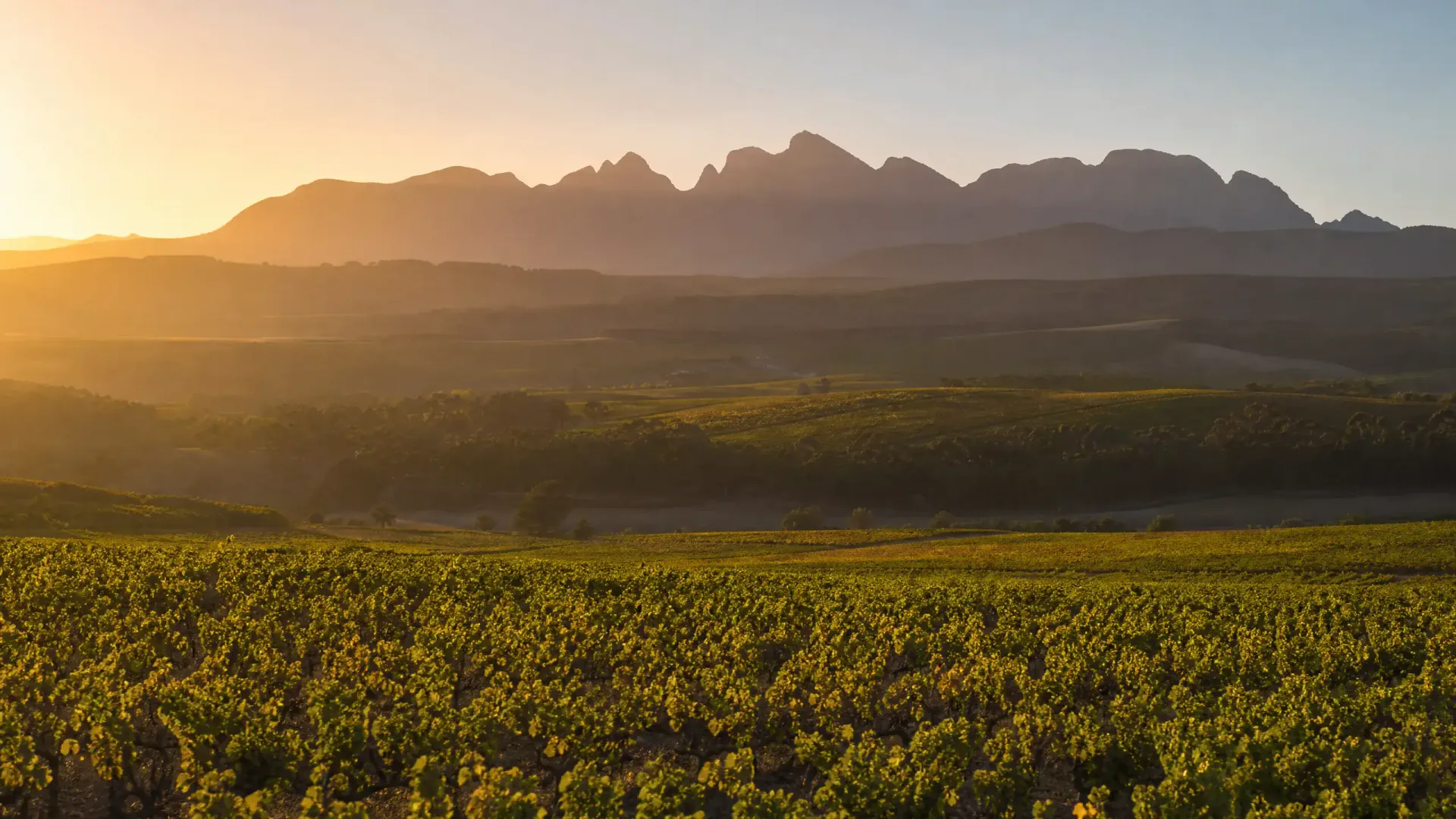
Cape Town is the right choice for most people, and falling in love is easy: a mountain, two oceans and vineyards behind the city. Sea Point and Green Point put dense, walkable convenience and a seaside promenade right on your doorstep. Gardens and Oranjezicht give you quiet, green breathing space on the slope below Table Mountain. Woodstock and Observatory pulse with creative energy, cheaper living and a rougher edge. Camps Bay and Clifton promise postcard beauty, with a steep price to match.
Cape Town has the densest remote-work infrastructure in Africa, with backup power in practically all its coworking spaces. Settle in, get to work, and start making this life yours.
Stellenbosch and Franschhoek in the Winelands are just half an hour away: smaller, safer and greener, with university life and an absurd number of good restaurants for their size. Picture it: this could be home.
Johannesburg is the economic centre: less pretty and less popular with newcomers, but your launchpad for business across Africa. Durban tempts you with warmer, subtropical living and a strong Indian influence, but infrastructure and safety make life harder.
Internet and power
Stay connected. Keep creating. Don’t lose your momentum. Fiber is widely available in Cape Town and Johannesburg and works well, with 100-500 Mbps plans costing ZAR 700-1,400 a month. Mobile networks are solid in the cities, too.
The worry you’ll hear about? Load shedding: scheduled rolling power cuts. Thankfully, the situation has improved a lot since the crisis years, a genuine relief. But it is not permanently solved. Make your plans with confidence, while allowing for its return in phases.
Here’s your peace of mind: it is manageable. Every decent apartment and coworking space has a battery system, an inverter with solar panels or a generator. Before you fall for that irresistible apartment view, ask what really protects your day: does the building have uninterrupted power and its own water reserve? A fiber router runs on a small power bank, and mobile networks usually stay up.
Cape Town has also endured a serious drought. Saving water is an everyday commitment, and your care truly matters.
Food and wine
South Africa may be the most underrated food country on our list, and discovering it feels like being let in on a delicious secret. Exceptional meat, fish, fruit and vegetables: all local, fresh and cheap. Imagine settling into a good Cape Town restaurant for a very good dinner, wine included, for ZAR 350-600, about half the European price, with equal or better quality. Every bite makes you wish you’d come sooner.
And the real luxury? The Winelands, right on your doorstep. South African wine holds its own internationally, yet a very good bottle costs ZAR 150-300 at the estate. Add the braai, a social institution, not just a barbecue, and a strong coffee scene. Come hungry. Leave longing for another taste.
People and community
Feel the warmth of South Africans: open, direct and sociable. With everything running in English, making connections feels easy.
You won’t be the only newcomer: Cape Town’s international community is large, especially during the European winter.
Find your circle, but understand the reality. Cape Town’s social life centres largely on certain neighbourhoods and circles. Society remains strongly divided by income and history, and as a newcomer, you’ll almost automatically find yourself moving within just one slice of it.
Cost of living
Make your money go further. Thanks to the rand exchange rate, South Africa offers incredible value if you earn in euros or another strong currency.
| Item (ZAR a month) | Cape Town | Stellenbosch / surroundings |
|---|---|---|
| Furnished one-bedroom, good location | 12,000-22,000 | 9,000-16,000 |
| Two-bedroom with sea view | 20,000-38,000 | 14,000-26,000 |
| Groceries and eating out | 6,000-12,000 | 5,000-10,000 |
| Rental car | 6,000-12,000 | 6,000-12,000 |
| Coworking, fixed desk | 2,500-5,000 | 2,000-4,000 |
| Fiber internet | 700-1,400 | 700-1,400 |
| Private health insurance, local | 1,500-4,500 | 1,500-4,500 |
Imagine waking up to your dream life in Cape Town, for a realistic €1,500-2,400 a month, including a car. Or fall in love with life in Stellenbosch or the surroundings for €1,200-1,900 a month.
Don’t let high-season rents put your dream out of reach. From December to February, Cape Town rents rise sharply. Leave your search until the last minute in January, and you pay double. Protect your budget: book three to six months ahead. One hurdle to prepare for: a local bank account is difficult without a residence permit.
Safety for digital nomads in South Africa
South Africa has one of the highest rates of violent crime in the world. That is a statistical fact, not media exaggeration, and you deserve honesty before you pack your dreams into a suitcase. Yet hundreds of thousands of people live completely normal lives there. What makes the difference? Risk varies enormously by place and by behavior.
- Where you live is not where the statistics come from. Most violent crime is concentrated in areas newcomers never visit. Choosing your location matters enormously.
- Protect your freedom with everyday risk awareness. Do not walk alone at night. Keep your phone out of sight on the street. Lock the car doors while driving and leave nothing visible inside. At night, do not wait at red lights in certain areas. Hike Table Mountain only in groups on busy routes. Leave valuables at home when you go to the beach.
- You deserve a home that feels like a refuge. Homes are secured with fences, electric fencing, alarms and private security that responds within minutes; check this with every rental.
Follow local habits, and you will usually have no trouble. Be careless, and statistically you will have a problem at some point. Your peace of mind matters too much to brush this aside: crime here is more often confrontational than in Europe.
For some, constant vigilance steals the joy; they do not come back after three months. For others, it becomes a habit within two weeks. Travelling with children? Your priorities shift: the Winelands or smaller coastal towns are the more sensible choice. Give yourself the confidence that comes with preparation, start with our digital nomad safety tips.
Health
Feel the relief of knowing you’re in good hands: South Africa offers excellent private healthcare, hospitals of Western European standard, very well-trained doctors and short waits, all at prices well below Central Europe. There’s a reason it’s an established medical tourism destination. An international policy or local private cover is mandatory; find your peace of mind with health insurance for digital nomads.
Embrace the Western Cape or Cape Town without malaria worries; it’s not an issue there. Dreaming of heading northeast, for example to Kruger National Park? Plan with confidence: malaria is relevant seasonally.
Climate
Trade northern winter for Cape Town’s Mediterranean climate and reversed seasons. Summer, from November to March, brings dry, sunny, warm days at 25-30 °C, with the strong southeasterly wind called the Cape Doctor. Winter, from June to August, turns mild, green and rainy at 12-18 °C, but be prepared: poorly insulated, rarely heated houses make it feel colder inside than out.
November to March, exactly the northern winter, is your moment to escape. Johannesburg, at 1,750 meters, offers a completely different climate: dry and sunny, with cool nights and summer thunderstorms.
Getting there and the time zone
Your next chapter is just an overnight flight away: flights from Europe take about eleven to twelve hours, with many connections via Doha, Dubai and Istanbul.
South Africa stays on UTC+2 all year, with no daylight saving time. That matches Central European summer time and puts you one hour ahead of Central Europe in winter. For European clients, that means no shifted meetings and no night work, just the freedom to enjoy your evenings.
Entry and the Remote Work Visa
Imagine making South Africa more than a fleeting escape. Your visa-free stay depends on your passport, but for longer stays, South Africa has offered the Remote Work Visitor Visa since March 2025, often simply called the digital nomad visa, under section 11(1)(b)(iv) of the Immigration Act. Ready to take that next step? Find every requirement and step on our South Africa visa page. The key points for 2026:
- Income: at least ZAR 650,796 a year, roughly €32,000-35,000 depending on the exchange rate, one of the lower thresholds worldwide, bringing your dream that much closer.
- Proof: show bank statements for the last three months, plus an employment contract with a foreign employer or documented client relationships if you are self-employed.
- Duration: make room for more than a holiday: the first term is usually 12 months, extendable to up to 3 years in total.
- Cover: protect your plans with health insurance valid in South Africa, and proof of accommodation.
- Certificates: avoid a stressful last-minute scramble. Police clearance certificates are not on the official list, but missions regularly ask for them from countries where you have lived for longer periods. This is typically the most time-consuming item, so allow several weeks. One less hurdle: the medical certificate with an X-ray report is no longer required as of July 2026 (Directive 10/2026), including for pending applications.
- Where: take the next step in person at a South African mission or visa center in your country of residence. Applications from inside South Africa are generally not accepted.
- Family: planning this adventure together? The visitor visa has no provision for dependents; family members need their own basis for staying.
Don't let paperwork derail your plans. A frequent reason for refusal: the rule refers to an employment contract signed by both parties with a foreign employer. If you are self-employed, document your work carefully with contracts, invoice history and proof of steady income.
Taxes in South Africa
Your South African dream deserves a clear-eyed look at tax. South Africa taxes residents on their worldwide income at progressive rates of up to 45%. Non-residents are taxed only on South African income. That distinction matters.
Don’t let a longer stay become a costly surprise. You become resident through one of two tests: ordinary residence, or a multi-year physical presence test requiring, among other things, more than 91 days in the current tax year and in each of the five preceding tax years, and more than 915 days in total over those five years. A typical three-month season does not make you resident; several consecutive years of long stays can.
Here’s the detail almost everyone misses, and you can’t afford to overlook: Remote Work Visa holders have their own registration rule with the tax authority SARS. Coming from a country that has a tax treaty with South Africa? You must register once you spend more than 183 days in South Africa within twelve months. Without a treaty, you must register regardless of how long you stay.
Protect your freedom to plan. South Africa also has exchange controls for residents, another reason not to become resident by accident, and taxes residents on capital gains. Get more detail in the South Africa tax guide on our sister site.
Your tax situation at home
Enjoy your South Africa escape, without assuming your tax obligations stay behind. For most people, it is a seasonal base, not a change of residence. A few months in Cape Town usually change nothing about your tax residence at home. Leaving your home country does not automatically end it either: your home country's rules decide.
US citizens remain subject to US income tax on their worldwide income wherever they live, yes, even abroad (IRS).
Dreaming of making South Africa your main home? Choose it for quality of life, not low taxes: 45% top rate plus capital gains tax. For most people, the clean model is residence and structure in a suitable country, with South Africa as the winter base, consistently below the presence thresholds. Make your next move with clarity: our guide on where digital nomads pay taxes explains the logic.
Is South Africa right for you?
Imagine swapping the northern winter for South African sunshine, without sacrificing your European working day. If nature, space, incredible wine and food mean more to you than low taxes, this could be your perfect escape. Especially if you can claim three to four months for yourself between November and March.
But be honest with yourself: if constant safety vigilance drains you, you dream of life without a car, or you need a tax-advantaged residence, South Africa is not your match.
Craving the same time zone and climate with a much lower safety risk? Explore Mauritius and Namibia, the first smaller and pricier, the second with thinner infrastructure. Want to keep Europe within easier reach? Morocco is your alternative.
Frequently asked questions
Ready for South Africa? Here’s what the South Africa Remote Work Visa requires
Your dream starts here: income of at least ZAR 650,796 a year, bank statements for the last three months, an employment contract with a foreign employer or documented client work, health insurance and proof of accommodation. Take that exciting next step: apply in person in your country of residence.
Do digital nomads pay tax in South Africa?
Dreaming of South Africa, but worried about tax? Only residents pay tax on worldwide income, at up to 45%. A typical three-month season does not make you resident. Remote Work Visa holders must register with SARS after 183 days in twelve months if their country has a tax treaty with South Africa, otherwise from the start.
Is South Africa safe for digital nomads?
South Africa calling your name? Don’t lose the dream, but go with your eyes open. It has one of the highest violent crime rates in the world, though most of it happens in areas newcomers do not visit. Follow local habits, don’t walk alone at night, and keep your phone out of sight. With these precautions, most people have no trouble.
What does your dream month in Cape Town cost?
Imagine making it happen: realistically €1,500-2,400 including a car, and €1,200-1,900 in Stellenbosch or the surroundings. Don’t let peak-season rents derail your plans: they rise sharply from December to February, so book three to six months ahead.
How do I deal with load shedding?
Don’t let power cuts derail your day. Rent an apartment or use a coworking space with batteries, an inverter with solar panels or a generator, and get peace of mind by asking whether the building has uninterrupted power and its own water reserve.
Planning a Cape Town season?
A winter escape or a new life in South Africa?
Make your move with confidence. We explore whether a visitor stay or the Remote Work Visa fits, how to avoid South African tax residence and SARS pitfalls, and where your residence should sit.
Book a consultation